Author name: Ayanshi@

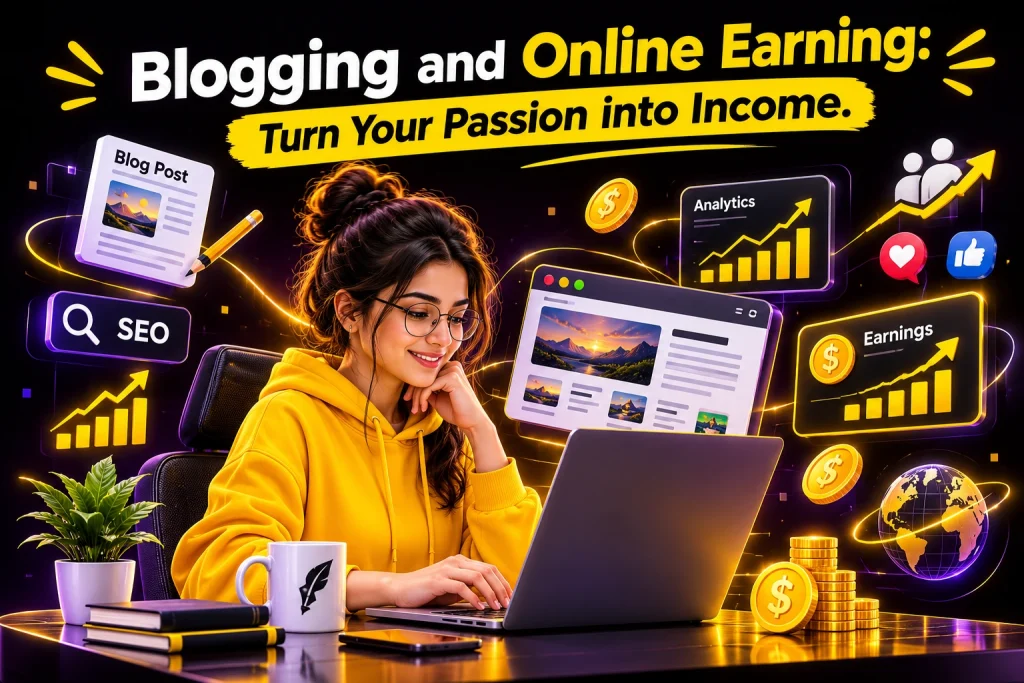
3D blogger illustration showing online earning, blogging, and digital growth.
Careers in Digital Hub

Blogging and Online Earning: Turn Your Passion into Income

Introduction In today’s digital world, the internet has created many opportunities to learn, work, and earn money online. One of the most popular ways to build an online career is blogging. Blogging is a way of sharing your knowledge, ideas, experiences, and information through articles on a website. Anyone who has an interest, in writing and learning can start a blog. Blogging is not a hobby; blogging can also become a career. With patience with creativity and, with consistency blogging helps me grow an audience. I can make money online through blogging What Is Blogging? Blogging is the process of writing and publishing articles on a website. These articles are called blog posts. A blog can be about different topics, such as: Education Technology Digital Marketing Fashion Travel Health and Fitness Food and Lifestyle If you like technology you can start a technology blog. I think starting a technology blog can be fun. Share details about phones, computers, AI and digital tools. Technology blog is a way to talk about things you’re interested, in. You can write about phones that come out. How to Start a Blog? Starting a blog is simpler than a lot of people believe. You only need an idea, an internet connection and a blogging platform.Choose Your Niche ,Choose a Blogging Platform, Select a Domain Name, Create Quality Content, Publish and Promote Your Blog Best Blogging Platforms WordPress WordPress is a platform. It gives users themes, plugins and ways to customize their websites. 2. Blogger Blogger is a beginner-friendly platform by Google. It is a simple option for starting a blog. 3. Wix Wix gives people the chance to build looking websites with an easy to use drag-and-drop tool. Every website builder has its special tools so pick one that fits what you want and what you know how to do Ways to Earn Money from Blogging Blogging can turn into a way to make money when your website gets visitors and offers information. Here are some common ways to make money by blogging: 1. Google AdSense Bloggers can show ads on their websites. Qualified publishers can make money from ads being viewed and clicked based on Googles rules. 2. Affiliate Marketing You can share products or services using affiliate links. If someone buys something through your link you could get a percentage of the sale. 3. Sponsored Posts Businesses might pay bloggers to write posts, about their products or services. 4. Selling Digital Products I do. Selling products lets me do both. I can keep updating my materials. I 5. Freelance Writing Blogging can also improve your writing abilities. Lead to freelance writing jobs. Tips to Become a Successful Blogger Blogging successfully takes time, work and strong commitment. Here are some helpful tips: Pick a subject that you like. Create useful content. Use clear language. Post articles regularly. Study SEO methods. Add pictures to your posts. Know what your readers want. Keep picking up digital skills. Remember that becoming a blogger does not happen quickly. Patience and staying steady are key, for a blogger. Advantages of Blogging Blogging has advantages: You have the chance to share your knowledge with people, better at writing, your projects, create your brand, discover online career opportunities. Future of Blogging The future of blogging is full of chances.As more people use the internet to find information to learn things and to discover products blogs that are helpful and honest will remain important. Blogs will continue to be important because they provide advice.Artificial Intelligence, Search Engine Optimization and digital marketing are changing how blogs work. I see that Artificial Intelligence helps writers find ideas People who focus on content use imagination. Understand what their audience wants can build a strong online presence. Conclusion I see that Blogging is a way to share knowledge.Blogging lets people express creativity and look for ways to earn money online and also helps beginners build skills and create something of their own. However earning money through blogging needs work, patience and consistency. There is no promise of income.. With the right strategy and good content blogging can turn into a valuable long‑term career. Start your blogging journey today. Turn your passion into an opportunity.
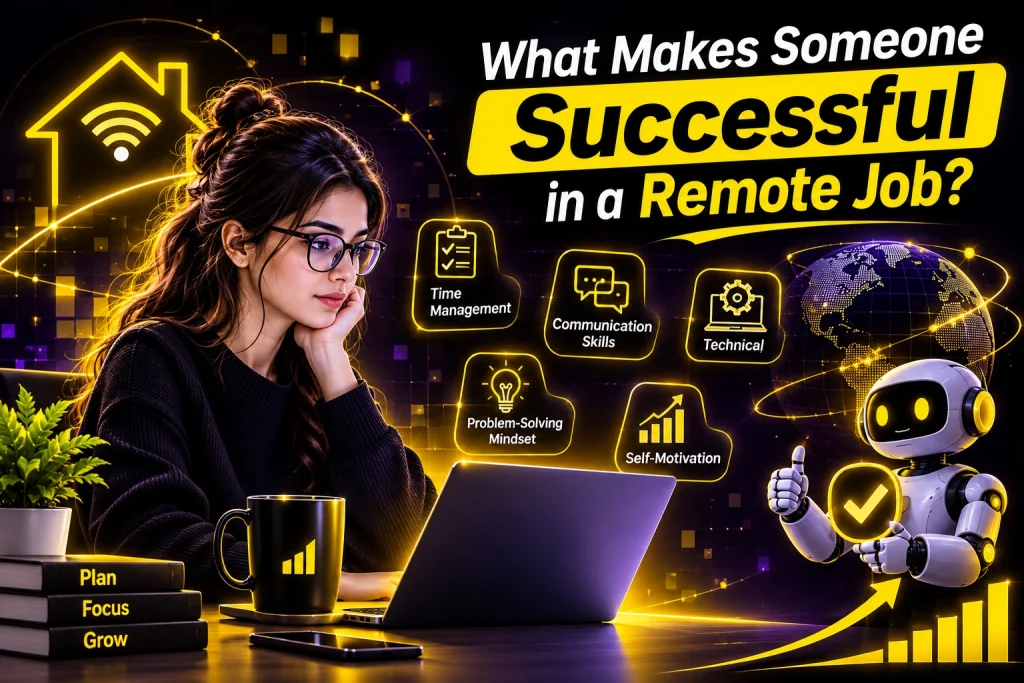
Futuristic remote work setup featuring a woman, laptop, AI robot, and digital productivity icons.
Careers in Digital Hub

What Makes Someone Successful in a Remote Job?

Introduction A hiring manager once told me about a candidate she almost didn’t hire because his technical marketing skills were just okay compared to people. What made her change her mind was one part of the interview. He explained how he planned his day how he reached out to a team before they even asked and how he fixed a misunderstanding all on his own without waiting for someone else to see it first. Technical skill got him considered. Remote work maturity got him hired.This final post of our series shifts focus slightly from marketing-specific knowledge to something increasingly just as important in today’s job market — the practical skills that make someone genuinely effective working remotely. Why Remote Work Skills Matter So Much Today Remote work skills have become very important because more companies are using ways to work and hiring people from different places. Companies now depend on communication, online teamwork and technology to run their daily activities.Because of this employees need more, than knowing their job to do well in remote jobs.Skills, like being able to talk manage time be disciplined solve problems and understand technology help people get their work done well without someone watching them. These skills also help people work well with others meet deadlines learn tools and keep being productive.No matter if someone is a student, a worker, a freelancer or someone who has worked for a time building work skills this can lead to job chances. Help them stay ahead in today’s changing job world. Essential Skills Every Successful Remote Worker Needs I have seen that companies search for skills when hiring people to work from home. These skills keep workers reliable even when they are not, in the office. Communication Skills Communication is one of the important parts of remote work. When people work from places they can’t always talk in person. So they have to share their thoughts through emails, video meetings, chat apps and project management tools. Good communication helps avoid confusion. It makes teamwork easier.. It keeps everyone up to date on how projects are going. Time Management and Organization Remote employees often have flexibility in managing their schedules.. That flexibility can become a challenge if there is no proper planning. Successful remote workers organise their tasks. They prioritise responsibilities. They also complete assignments, within deadlines. Using calendars helps keep track of time. Task managers help stay on top of work. Productivity tools make daily work easier. All of these tools support organization and focus.   Technical Skills Remote work relies a deal on technology. Employees need to learn how to use computers. They need to learn how to use communication platforms. They need to learn how to use cloud storage. They need to learn how to use software that’s specific, to their industry. The amount of knowledge required depends on the job role. Employees may need to learn: – Microsoft Office and Google Workspace. – Zoom and Google Meet. – Slack and Microsoft Teams. – Trello, Asana and project management tools. – Industry‑specific tools and software. Employees who are comfortable, with technology can finish tasks quickly and can adjust to new working systems faster. Problem-Solving Abilities Remote employees sometimes face issues, problems or delays in communication. Of waiting for someone else to fix everything successful professionals take the time to understand what is going on. Successful professionals look for ways to handle the situation. Let others know when successful professionals need help. Strong problem-solving skills show that a person can work on a person and take responsibility, for a person work. Self-Motivation and Discipline That are important when working from home.Working from home can have distractions, unexpected interruptions and not much supervision.Employees who are motivated, on their stay focused. Employees stick to their schedules. Employees finish their tasks when no one is watching Employees doing the tasks.Making a routine can help improve focus and get more work accomplished. How to Stay Productive While Working Remotely The routine must help them stay focused. The routine must help them finish their work on time.A special place to work a schedule, clear goals and attention to tasks all help increase productivity. Being, in a place to work makes a big difference. Having a schedule helps keep things on track. A schedule keeps things on track. Digital helpers, like Google Calendar, Trello and Asana can also organize jobs. Digital helpers can also organize jobs. Show progress. Regular breaks, cutting out distractions and keeping a work-life mix are just as vital.With these habits remote employees can handle duties better keep performance and reach stronger results. Digital Tools That Help Remote Employees Work Better Technology makes remote collaboration possible. From online meetings to project management, digital tools help employees communicate, organise tasks, and complete projects efficiently. Learning these tools helps beginners feel more comfortable when working from home. You do not have to master every tool, at once. Begin with the platforms that’re most common in your field and then slowly broaden your skill set. Common Challenges of Remote Work and How to Overcome Them Remote work offers flexibility, but it also comes with challenges that can affect performance and professional development. Understanding these challenges can help employees prepare better and develop effective solutions. Remember that becoming successful in remote work takes time. Developing good habits and learning from everyday challenges can gradually improve your professional performance. How to Build a Successful Remote Career Building a career is not, about finding a job where you can work from home. Building a career takes effort. It also means you have to prove that you can handle your time and your tasks, on your own without someone keeping an eye on you. Identify Your Career Interests I find that this simple plan helps many people find a job that feels right. Some popular remote jobs include:– Digital Marketing Specialist.– Content Writer.– Graphic Designer.– Social Media Manager.– Web Developer.– Virtual Assistant.– SEO Executive.– Customer Support Executive. Develop Job-Ready Skills Choose a career field and focus

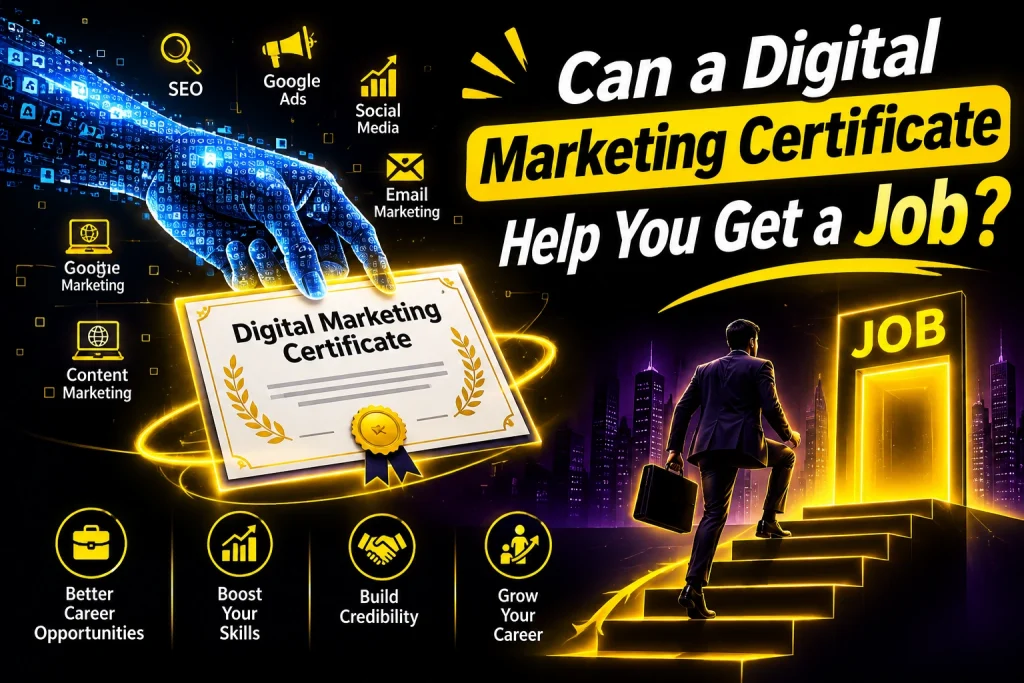
Digital marketing certificate showcasing skills, career opportunities, and pathways to professional growth.
Careers in Digital Hub

Can a Digital Marketing Certificate Help You Get a Job?

Introduction In today’s first world companies are turning more and more to online platforms to connect with customers sell their products and strengthen their brands. Whether it’s using media to reach people optimizing websites for search engines running Google Ads sending email campaigns or creating content digital marketing is now a must-have part of how businesses operate. Because of this more and more people are starting to look into marketing as a career path. Students, graduates and even professionals already in the workforce are signing up for digital marketing courses. A question that keeps coming up is: Can a digital marketing certificate actually help you land a job? The answer is yes. A digital marketing certificate can help you get opportunities. It teaches you skills that companies want. You get to work with tools such, as Google Analytics, Meta Business Suite and an email marketing platform. You also learn how digital strategies work in situations. This kind of knowledge tells employers that you are focused and prepared to help. So yes a digital marketing certificate can help you get a job. What Is a Digital Marketing Certificate? A digital marketing certificate is a badge that you get after finishing a marketing training program or class. A digital marketing certificate proves that a person has learned about marketing ideas and picked up skills, in online advertising methods. Depending on the course a person may learn about: – Search Engine Optimization (SEO) – Search Engine Marketing (SEM) – Social Media Marketing (SMM) – Google Ads and paid advertising Content marketing Email marketing Affiliate marketing Website analytics and performance tracking Lead generation and conversion optimization Digital marketing strategy. Planning Some certificate programs focus on theory while other certificate programs include hands‑on tasks, live projects, case studies and industry tools. I think that a good digital marketing course helps you see how businesses draw visitors create leads keep customers engaged and grow sales through channels. Yes a digital marketing certificate can help you get a job especially if you are new to the workforce or someone who wants to change jobs. Companies look for people who know about marketing tools and can help companies grow. A certificate that is known and trusted can show that you are serious, about learning and that you know marketing ideas. Here are some ways a digital marketing certificate can help your career. Helps You Develop Job-Ready Skills One of the advantages of getting a digital marketing certification is learning skills that are crucial for a successful career in digital marketing. These skills include improving websites for search engine optimization running social media campaigns managing paid advertising writing marketing copy and reviewing campaign performance data. These abilities are highly valuable to businesses in sectors, such as education, healthcare, retail, real estate, information technology, hospitality and e‑commerce. Gaining experience in these areas greatly improves your chances of landing an entry‑level position, in digital marketing. Makes Your Resume More Attractive When hiring managers get applications from graduates they usually search for people who have worked on building skills that are important in a job. A certificate, in marketing can make your resume catch attention. It shows you’ve gone through training and have a solid grasp of the basics in this field. On your resume include your certification, the tools you’ve used any projects you’ve worked on and practical tasks you’ve completed. For example of just saying “Digital Marketing Course Completed ” focus on specific skills, like: Basic SEO and keyword researchSocial media campaign planningGoogle Ads fundamentalsContent writing and optimizationGoogle Analytics and reportingThis helps employers understand what you can actually do. Provides Practical Industry Knowledge A quality digital marketing certification program goes beyond classroom learning. It may include activities such, as: Creating a sample website.Performing keyword research.Optimizing website content.Designing social media posts.Creating a Google Ads campaign.Preparing SEO reports.Analyzing how people visit a website. Hands-on training lets you try out the things you have learned. You can actually do the tasks yourself which helps you understand better. Companies often, like people who can prove they know how to do things of just talking about marketing ideas. Opens Doors to Different Career Opportunities Digital marketing is a field that offers different career options. After you complete a certification program, in marketing and gain the skills you have learned you can look for entry-level digital marketing jobs that match your interests and your strengths. For instance if you like writing content marketing might be a fit. If you enjoy working with numbers and data SEO or performance marketing could be the path, for you. A certificate can guide you in discovering these options and help you decide which area you want to focus on. Builds Confidence During Job Interviews A digital marketing certificate can help you feel more confident during job interviews. When you get ready for a marketing certificate you learn marketing words, marketing tools, campaign plans and what people, in the marketing industry do. The knowledge, from a marketing certificate can help you answer interview questions. The digital marketing certificate also helps you explain how various digital marketing tasks help a business grow. What Jobs Can You Get After a Digital Marketing Certificate? SEO Executive SEO executive working on website analytics and keyword research. An SEO Executive enhances a website’s prominence within search engine result pages. Conducting keyword research Optimizing website content Improving website structure Performing competitor analysis Identifying technical SEO issues Monitoring website performance For people who enjoy research building better digital platforms and solving tough problems a job, in search engine optimization can be a very satisfying career path. Social Media Executive A Social Media Executive manages social media campaigns for a company. They manage the company’s social media presence on platforms such, as Instagram, Facebook, LinkedIn and YouTube. Common tasks include planning media calendars. Creating engaging posts. Managing social media accounts. Responding to comments and messages. Monitoring engagement. Analyzing how social media is doing. This job is good, for people who like to be creative talk to others and

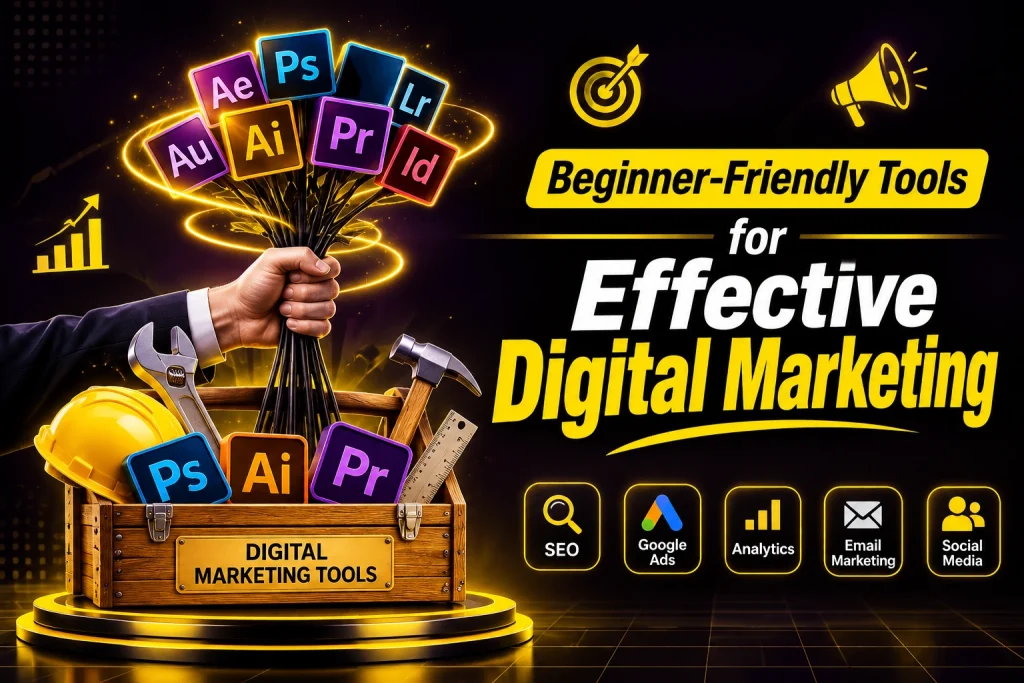
Digital marketing toolbox featuring essential tools for SEO, Google Ads, analytics, email marketing, and social media.
Careers in Digital Hub

Beginner-Friendly Tools for Effective Digital Marketing

Introduction A new freelancer once spent her entire first paycheck on five different premium marketing tools, convinced professional software was the missing ingredient behind bigger, more established competitors. Months later, she realized she was barely using most of them, while a single free tool she’d initially overlooked was doing ninety percent of the actual heavy lifting. Tools matter, but knowing which ones genuinely matter matters even more.We just explored how to land your first freelance client. Now let’s look at the practical toolkit worth building early, so you can actually deliver strong work once that first opportunity arrives. How to Start Your Career with Zero Experience Most entry-level job listings ask for one to two years of experience, which understandably feels contradictory for someone just starting out. But here’s what often goes unnoticed: much of that “experience” requirement is really just a shorthand for proof that you can actually do the work, not necessarily proof that you’ve held an official job title before.Once you understand that distinction, the path forward becomes far clearer — you don’t need a job to gain proof of skill. You need real, demonstrable work, regardless of who paid you for it. Why Tool Choice Deserves Careful Thought It’s tempting to assume more expensive, more advanced tools automatically produce better results. In reality, most beginners genuinely need only a small handful of reliable tools, used consistently and well, rather than an overwhelming collection of software that ends up mostly unused.The goal isn’t collecting tools — it’s choosing the smallest, most effective set that lets you actually execute your work confidently. Analytics and Data Tools Google Analytics — As covered earlier in this series, this free tool remains the standard for understanding website visitor behavior, and is genuinely essential for anyone working in digital marketing, regardless of specialization.Google Search Console — A free companion tool that shows exactly how your website performs specifically within Google search results, including which search terms bring in visitors. A simple spreadsheet or free planning tool — As discussed in our earlier post on content calendars, you don’t need expensive software to plan content effectively; a well-organized spreadsheet works perfectly well for beginners.Social media scheduling platforms — Many offer free tiers allowing you to plan and automatically publish posts across multiple platforms in advance, saving significant daily time. Design Tools Free, browser-based design platforms — Modern design tools have made it possible to create genuinely professional-looking graphics without needing traditional, expensive design software or advanced technical skill.Stock photo and video libraries — Many platforms offer free, high-quality images and video clips, useful when you don’t have original photography or footage available. SEO and Keyword Research Tools Free keyword research tools — Several platforms offer limited free access to see approximately how often specific search terms are used, helping guide which topics are genuinely worth writing about.Basic website audit tools — Free tools exist that scan your website and highlight simple technical SEO issues, like slow loading speed or missing page descriptions. Email Marketing Tools Free-tier email marketing platforms — Most major email tools offer a free plan for smaller subscriber lists, allowing beginners to build and manage an email list without upfront cost until it grows significantly. AI-Assisted Tools As covered earlier in our AI-focused section, generative AI tools have become genuinely useful for brainstorming, drafting, and speeding up content creation — provided outputs are always fact-checked and refined with your own voice and judgment before publishing. Smart Ways to Choose What You Really Need Start with your specific focus area. Someone specializing in social media doesn’t necessarily need advanced SEO software immediately, while someone focused on content writing may prioritize keyword research tools first.Choose free versions first.Most new people can do an amazing amount of things just using the free options. They only move to the paid versions when a specific problem starts to stop them from doing what they want.Avoid tool-hopping. Constantly switching between different platforms searching for a “better” option often wastes more time than simply committing to learning one solid tool thoroughly. A Simple ExampleImagine a beginner freelancer who works on media management for small local businesses. Of buying several expensive and advanced platforms right away she starts with a free scheduling tool, a free design platform for making simple graphics and Google Analytics to see how her content affects website traffic for clients who have a website.As her client base grows and her needs become more specific — managing multiple accounts simultaneously, for instance — she eventually upgrades to a paid scheduling tool offering more advanced features, but only once her actual workload clearly justified the added cost. How to Avoid Mistakes When Using Digital Tools Buying tools, before understanding basic fundamentals. Advanced software does not replace understanding of strategy and audience – it simply executes your decisions faster once you already know what you are doing. Assuming more tools automatically mean results. A small used toolkit consistently outperforms a large underutilized collection of software subscriptions. Ignoring trials before committing to paid plans. Testing a tool thoroughly during a trial period helps confirm it genuinely fits your workflow before committing financially.

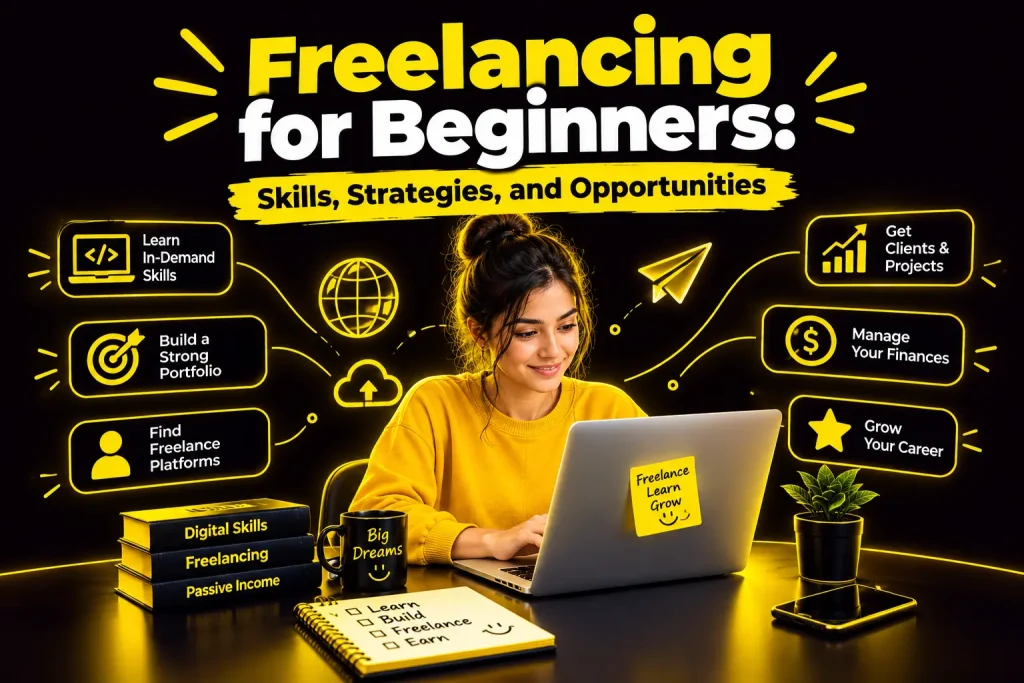
Freelancing beginners guide with skills, strategies, and career opportunities.
Careers in Digital Hub

Freelancing for Beginners: Skills, Strategies, and Opportunities

Freelance Opportunities A graphic design student once messaged fifteen small local businesses offering a single free logo redesign, just to build a portfolio. Fourteen never replied. The fifteenth, a small pet grooming shop, said yes — and that one modest, unpaid project eventually led to three paying referrals within two months. Freelancing rarely starts with a big break. It usually starts with one small, unglamorous yes. We just looked at how to begin a marketing career, with no experience. Freelancing is often the way to go from learning skills to doing real paid work. It’s a step that helps you get your foot in the door. Understanding the Concept of Freelancing You build your business. You do not work for one company time. You take on projects as they come. Each project is different. You decide what to work on and when to work on it.You also find your clients. You talk to them directly. You say how much you want to be paid. You are in charge of your schedule. You decide how many hours to work and when to stop.Freelancing offers something traditional entry-level jobs often don’t: a lower barrier to getting started. Instead of convincing a hiring manager to take a chance on someone with no formal experience, freelancing simply requires convincing one small client to trust you with one small project. Strategies for Securing Your First Client Start With People You Already Know Your first client doesn’t need to come from a stranger online. Friends, family or local businesses that you already know are usually more open to taking a chance on someone who is creating their first portfolio piece. Offer a Low-Risk First Project Instead of asking for a big ongoing contract right away try offering a small clearly explained project. Like a single social media audit, one week of content or a basic website check. So a nervous first client can say yes easily. Be Upfront About Your Experience Level At the time still show confidence in your skills and the work you are doing. Being truthful doesn’t mean you can’t believe in your abilities. Use Free or Discounted Work Strategically But One free or very cheap project can be a good way to start building your first portfolio and get a testimonial.. If you keep charging too little for your work it will be hard to charge fair sustainable prices later. Ask for a Testimonial, Not Payment Especially when you are just starting out a real detailed testimonial from a client can be just as important, as the money you get because it helps you in your next pitch. Best Places to Find Freelance Clients Do not act like you understand more than you actually do. I think it is better to be truthful. Networks. Friends, family, former colleagues or people within existing communities you are already part of. Local businesses. Shops, restaurants or service providers who often lack dedicated marketing help. I suggest reaching out to businesses first. Freelance platforms.Websites that are made to bring freelancers together with clients are helpful once you have a little collection of your work to show. Freelance websites can also be a way to get clients. Social media outreach is, about engaging with business accounts. Social media outreach means offering thoughtful help instead of generic copy‑pasted pitches. Social media outreach works best when you talk directly to business accounts and show care.Social media outreach, about starting out with the topic while still showing belief in your skills and the work you are doing. Mistakes That Hold Beginners Back Pitching overly broad services.When you say you do all types of marketing it can feel less credible. Offering one specific digital marketing service is more trustworthy. Undervaluing your work forever is bad. Early discounted work can help build a portfolio. Working for free or, for pay over a long period can make it hard to build a sustainable freelancing career. I think not having contracts or clear expectations can be risky. I believe even small informal projects should have a written agreement that clearly states the scope the timeline and the payment terms.This helps avoid misunderstandings on. Giving up after early rejection. Most freelancers face several unanswered pitches before landing their first genuine yes — persistence, not perfection, tends to be the real deciding factor. Why This Path Builds Real, Transferable Skill Beyond income, freelancing teaches skills that traditional employment often doesn’t force you to develop as quickly Freelancers have to make proposals, pitch their services, and deal with rejection on a regular basis. This develops resilience and sophisticated negotiating abilities that regular employees almost ever use.Freelancers have to get good at billing keeping track of spending figuring out profit margins and handling cash flow. They do this even though their work can be unpredictable, with periods of income followed by low or no income. There’s no HR or payroll team to help them so they must manage all of this on their own.Time equals money. Freelancers learn to focus on what matters. They must juggle projects at once. Missing deadlines or losing income happen away when you procrastinate. You must manage client communication handle self‑management, set pricing, for your value and accept real feedback. You Can Find All Answers Here What What is freelancing, and how does it work for beginners?E-mail marketing? Freelancing is a way of working independently by offering services to clients on a project or contract basis. Beginners can start by choosing a skill, creating a portfolio, finding clients, and completing projects online. Which skills are best for beginners to start freelancing? Some popular freelancing skills include content writing, graphic design, web development, video editing, social media management, SEO, and digital marketing. Beginners should choose a skill based on their interests and learning goals. How can beginners find their first freelancing client? Beginners can find their first clients through platforms like Fiverr, Upwork, and Freelancer. They can also use LinkedIn, social media, personal networking, and portfolio websites to showcase their work and connect

Woman and AI robot promoting freelancing, career growth, and digital marketing.
Careers in Digital Hub

Explore Freelancing, Career Growth & Digital Marketing

How to Start ? A former retail cashier once applied to over thirty marketing internships and heard nothing back from any of them. Instead of waiting for someone to hand her a chance, she spent two months managing social media for her cousin’s small bakery, completely unpaid, just to have something real to show. That single unpaid project became the exact thing that finally got her first paid marketing role. Zero experience doesn’t have to mean zero options — it just requires a different starting move. This post begins our final section of the series, focused on freelancing, careers, and the practical skills needed to actually break into digital marketing.Why “Zero Experience” Feels Like Such a Big Barrier Pick One Specific Area to Start With Digital marketing is broad covering everything from SEO to media to email marketing to paid advertising. I find that trying to learn all of marketing at once often leads to shallow knowledge across the board rather than genuine skill in anything specific. Choosing one starting area.For example social media. Basic SEO writing.This gives you a base to build demonstrable ability so you do not spread yourself too thin, from day one. Social media management, social media management. Gain Practical Experience Through Real Projects Countless free resources exist online explaining marketing concepts, but watching videos alone rarely builds genuine skill. Real skills come from doing the work. Writing captions looking at how a real account is doing making up a fake ad campaign. A good first step is to choose a business or a personal project and imagine that it is a client. This makes the work more interesting. Gives it more meaning. Make a plan for content write real captions watch basic results. This one task usually teaches more, than weeks of reading about it. Turn Small Projects Into Valuable Experience A portfolio doesn’t require paid client work to be legitimate. Some of the beginner portfolios are created by people who do things like this: Volunteering to help a local business or a community nonprofit by handling their social media accounts or creating blog posts. The person offers their time and skills in exchange, for a testimonial of payment. Working on projects such as starting a blog or a social media account that focuses on a specific topic and taking it seriously enough to show real planning and outcomes. Creating campaigns by picking a real brand and designing a pretend marketing plan or changing their content style making sure to say it is just a personal project and not actual work, for a client. The goal is simply having something concrete to show — actual writing, actual strategy, actual thinking — rather than a resume with no visible proof behind it. Build Technical Skills With Marketing Platforms Employers often look favorably on candidates who already have basic familiarity with commonly used marketing tools, even without deep, professional-level mastery. Spending a few hours exploring free versions of analytics platforms, social media scheduling tools, or basic design software gives you a meaningful head start over candidates who’ve never touched them at all. Create a Smart Strategy for Job Applications Rather than sending an identical, generic application everywhere, take time to genuinely understand a handful of companies you’re applying to, and tailor your application to reflect real interest in their specific brand or industry. A thoughtful, specific application often stands out far more than a higher volume of generic ones. Habits That Can Hold Back Your Professional Growth I keep waiting for the opportunity before I start. Real experience even if it is small and unpaid is better than waiting for an ideal first job to show up. I try to learn every marketing skill at once. A focused foundation in one area shows more real competence than having only shallow knowledge in many areas. I underestimate how valuable small real projects are. One well‑documented project often weighs more in interviews than a list of finished online courses that have nothing tangible to show. I apply without any proof of ability. A resume alone rarely stands out. A portfolio even if it is small shows capability in a way that’s far more convincing, than claims alone. Why This Path Genuinely Works Digital marketing, more than many other fields, Revenue can be directly linked by marketers to particular ads or keywords.Websites like Google Analytics help companies see how customers interact with their brand. Businesses use tools such, as Meta Ads Manager to reach people who match age groups, interests and shopping habits. This way businesses can focus on the audience of trying to reach everyone. Based on performance measurements, campaigns can be promptly suspended, modified, or fully redesigned. rewards visible, demonstrable initiative. Because much of the work happens online and leaves a visible trail — posts, campaigns, written content — it’s uniquely possible to build real, checkable proof of skill before ever landing an official job title. Final Touch Building real projects on your own naturally leads many beginners toward freelancing as an early income source and experience builder. In the next post, we’ll break down what freelancing actually involves, and practical steps for landing your very first paying client.

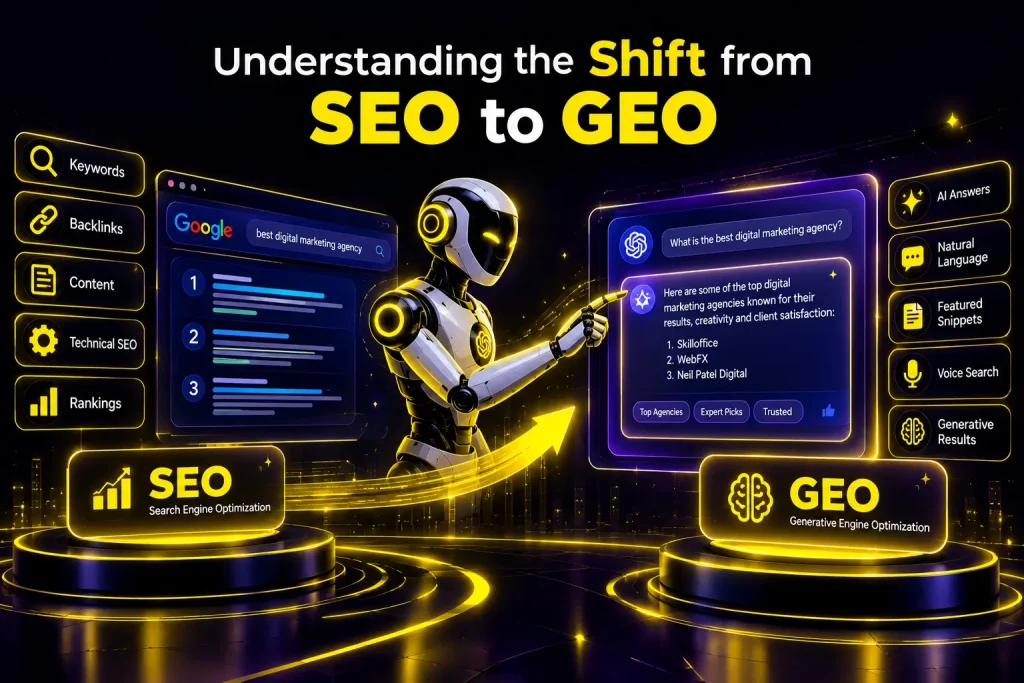
Futuristic robot illustrating the transition from traditional SEO to AI-powered Generative Engine Optimization (GEO).
SEO ( blog )

Understanding the Shift from SEO to GEO

Introduction For, than twenty years brands focused on one main goal when building their online presence: getting higher on Google’s rankings. They used keyword strategies ran link-building campaigns and spent a lot of time adjusting tags. This was how digital marketing worked. But something fundamental is breaking that formula. AI assistants such, as ChatGPT, Claude and Googles AI Overviews are providing answers away sometimes without taking people to any website. This change has created a method called Generative Engine Optimization or GEO. Rather than competing for a ranking position, businesses now compete to be the source an AI model chooses to reference, paraphrase, or recommend. This isn’t a passing trend — it’s reshaping how visibility works online, and companies that ignore it risk becoming invisible in conversations happening entirely inside a chatbot window. Defining GEO in Simple Terms GEO means shaping content so that AI systems see it as trustworthy, useful and worth mentioning when they create an answer. I think GEO is about making the content clear and helpful for AI. Traditional SEO is about making content, for web crawlers and ranking algorithms. I believe SEO helps the content appear higher in search results. What Is Driving the Evolution of Search Engines? Search results are being replaced by generated summaries. I have noticed that Google now places overviews above standard listings for a large portion of queries. Google places AI‑written overviews above listings for many queries and users frequently get their answer without ever visiting a page Chat-based tools are becoming go-to research destinations. People are turning to conversational AI instead of typing queries into a search bar. These tools don’t hand back a page of links — they deliver one condensed answer, occasionally backed by a few source citations. Credibility is measured differently now. Language models don’t just count backlinks. Look for how often a keyword appears.I see that people pay attention to how the information’s written. They check if the facts line up between sources and if the information makes sense in a clear logical way. Getting AI to trust your content is no longer, about tricks or small technical changes. How Businesses Can Optimize Content for AI-Powered Search Prioritize plain direct answers. AI models like content that answers a question fast and clear. Split information into sections with headers, bullet points and tables that are simple to read and copy. Keep your facts uniform everywhere. Language models often verify claims by checking sources.Make sure your company details, pricing, statistics and messaging stay the same on your website. Keep them the same on channels, directories and review platforms. Focus depth over breadth. Of spreading thin across many unrelated topics concentrate on becoming a recognized authority within a specific niche through thorough well-researched material. Implement data markup. I find that when you use schema and when you use formatting, search engines and AI systems can understand your content better. Earn visibility on platforms. AI tools often gather information from community forums review sites and trade publications. Genuine mentions and endorsements, in these spaces boost your chances of being referenced Track how AI represents your brand. Just as marketers monitor keyword positions they now need to track how and how accurately. Their business appears in AI-generated responses. New monitoring tools make this easier and staying ahead of this trend gives an advantage. Frequently Asked Question ? Is GEO going to replace SEO completely? No.SEO still matters. AI tools use many of the trust signals that search engines use like site quality, authority and clear writing.GEO works on top of SEO. It does not replace SEO. 2. How do I know if AI tools are actually mentioning my business? Start manually — ask ChatGPT, Claude, or Perplexity questions a potential customer might ask about your industry and see what comes up. A few dedicated GEO-tracking tools are also starting to emerge that monitor this more systematically, similar to how rank-tracking tools work for SEO 3. Do I need to rewrite all my old content for GEO? Not always. Begin by looking at your performing pages or the ones that matter the most. Check if those pages answer questions clearly and right at the start. Final Thoughts The shift from SEO to GEO reflects a change, in how people look for information and decide what to trust. When AI tools are used more and more to find answers companies that are clear, consistent and show expertise are the ones that language models are likely to pick as reliable sources. Success in this new landscape won’t just mean ranking well — it’ll mean becoming the answer itself.

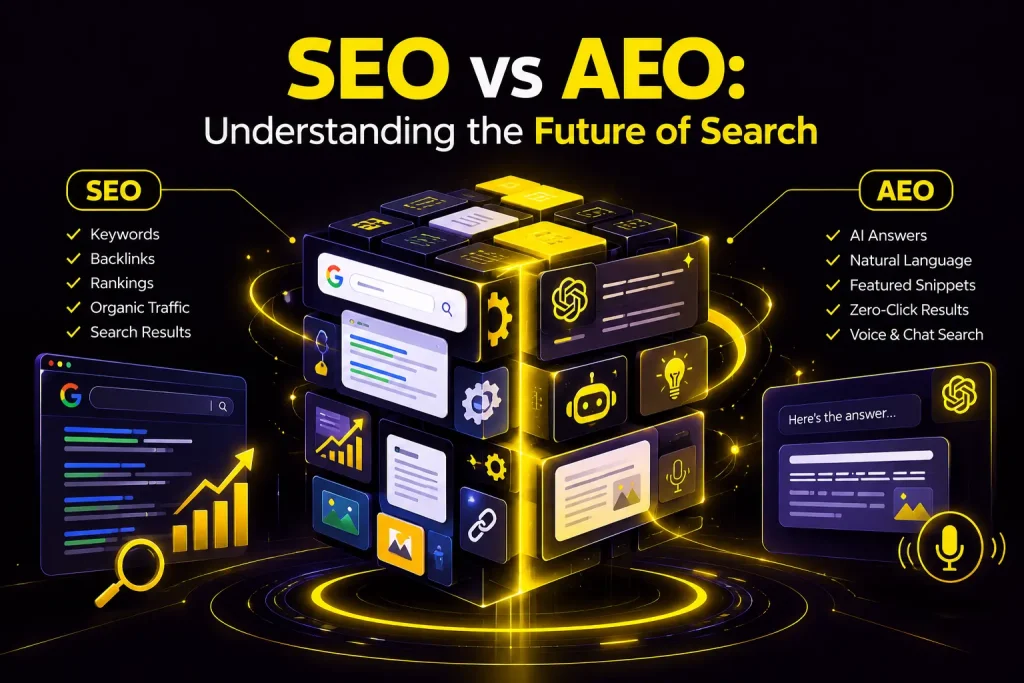
Futuristic SEO vs AEO illustration showing traditional search rankings and AI-powered search answers.
SEO ( blog )

SEO vs AEO: Understanding the Future of Search

Introduction SEO (Search Engine Optimization) focuses on improving a website’s visibility and rankings in traditional search engines like Google. AEO (Answer Engine Optimization) focuses on optimizing content so that search engines and AI-powered platforms can understand, extract, and provide it as a direct answer to users’ questions. This is where keyword research becomes important. Keyword research is a method, for finding, studying and selecting the search terms that match the website, the business and the people that you want to reach. Keyword research guides you in picking the search terms for the audience you aim to attract.It helps you make content that answers the questions people ask and links your business to the people. However good keyword research is not, about picking the most popular words. It also means knowing why people search, looking at how many others use the words finding long-tail keywords and spotting shifts in how people search. In this guide we will look at why keyword research matters, the latest SEO trends, hands‑on strategies, tools and the common mistakes to avoid. This will help you build a search engine optimization strategy. SEO vs AEO — 5 Key Differences Goal I see that SEO focuses on improving website rankings in search results. SEO is, about making a website appear higher in search results. I see that AEO focuses on making content suitable for answers. Search Behaviour I see that SEO targets keywords people type into search engines. I see that AEO targets questions and conversational searches people ask. I see that SEO is about keywords, headings, links and content that is set up to perform well on search engines. I see that AEO is, about giving organized answers to questions. Search Experience I see that AEO seeks to provide information directly inside the search experience itself. Overall Strategy I see that SEO builds long‑term search visibility. I see that AEO expands visibility into AI‑powered and answer‑focused search experiences. The Power of SEO + AEO in Modern Digital Marketing Wider Online Visibility Combining SEO and AEO helps businesses make their content work well for search results and also for new answer-focused search experiences. This way content shows up in places and reaches more people. It’s about being ready, for how people search today and tomorrow.   Better User Experience   Answering users’ questions clearly helps visitors find relevant information faster and makes website content easier to understand.   Stronger Brand Authority   Consistently publishing useful and reliable information can help a business establish greater credibility around the topics related to its products or services.   Future-Ready Content Strategy   Search is becoming conversational and AI-powered. Combining SEO, with AEO really helps businesses adapt their content strategy to ways people discover information. With SEO and AEO companies can stay ahead in a changing search landscape. Frequently Asked Questions (FAQs) Is AEO replacing SEO? No. AEO is not a replacement for SEO. Both approaches can work together to improve a business’s visibility across traditional search and newer answer-focused search experiences. 2. Why is AEO becoming important? As people ask questions in a conversational way and use search tools that are powered by artificial intelligence companies must create content that gives clear answers and shares helpful and easy to understand information. 3. Should businesses use both SEO and AEO? Yes.Using both approaches can help businesses create content that supports search visibility while also getting ready, for the increasing importance of AI and answer-focused search. 4. Can existing SEO content be optimized for AEO? Yes. Existing content can be improved by adding clear questions, concise answers, useful context, and better content structure. 5. What type of content works well for AEO? Using both approaches can help businesses create content that supports search visibility while also getting ready, for the increasing importance of AI and answer-focused search. CONCLUSION Search is moving away from ranking systems to direct answers and answers made by AI.SEO remains essential for keeping a website visible. AEO makes content clearer and more helpful, for searches that want answers. Companies that use both SEO and AEO can reach people with search styles strengthen their online presence and produce content that truly answers what customers ask.

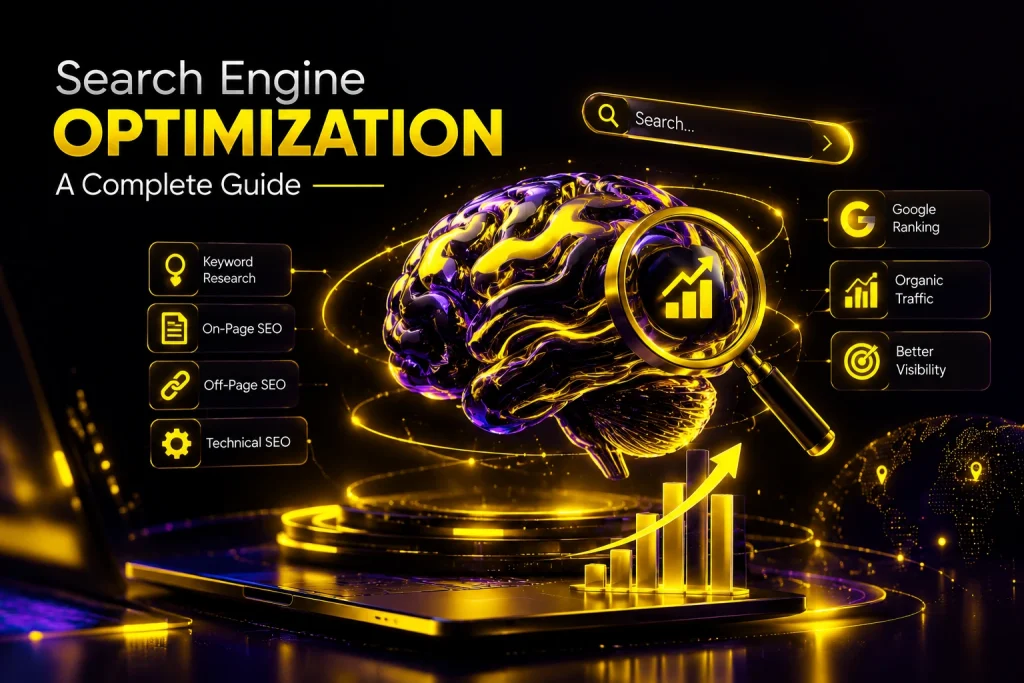
Futuristic SEO brain with a magnifying glass, keyword research, and digital growth analytics in neon yellow and purple.
SEO ( blog )

Search Engine Optimization: A Complete Guide

Introduction In today’s world having a website is just the start. It’s not enough to build one and expect people to find it. For a business to grow online people need to come across your site when they search for what you offer. Whether that’s a product, a service or helpful information. That’s where Search Engine Optimization or SEO comes in. SEO helps boost your website’s visibility, in search engine results. It brings in visitors who are already looking for what you provide. It’s not magic. It’s work. You make your site better so search engines like Google can understand it and real people can find what they need. If you run a business look after a website or put out online content knowing SEO can make a real difference. It’s about improving your content, how your site is built how it loads and how trustworthy it seems. All of these things help your pages rank higher and get noticed. In this guide we’ll go over what SEO really is. We’ll explain how it works, the types of SEO why it’s helpful and the steps you can take to make your website easier to find in search results. What Is Search Engine Optimization (SEO)? Search Engine Optimization, which many people call SEO is the method of making a website so that it appears higher in search engine results that do not cost money. Those results are also known as search results because businesses do not pay for every click that comes from them. I have seen that Search Engine Optimization makes a website easier to find easier to understand and easier to navigate. Search engines like Google look at web pages to learn what they are about and decide which pages fit a user’s search best. For example if a person searches for ” digital marketing agency,” a website that has been well optimized for digital marketing services may show up in the relevant search results. Still the ranking of a website depends on factors, such, as how relevant the page is, how good the content is, how much competition there is and how useful the page is overall. Why is SEO important? Website helps potential customers find your website. Website creates chances to bring in people who are looking for your content or services. I see how the website helps people use your website and find what they need. Website builds recognition for your brand. Website makes your website seem trustworthy. Website allows companies to connect with people who are looking for what they offer. SEO is an ongoing process rather than a one-time activity. Search trends, competitors, website content, and search engine systems can change, so websites need regular monitoring and improvement. How Does Search Engine Optimization Work? Search engines use automated systems to discover, understand, organize, and rank web pages. Understanding these processes helps you create a website that is easier for search engines to access and more useful for visitors. Crawling Crawling is the way search engines scan the web. Crawling happens when automated programs work to find web pages. Crawling can follow links read sitemaps or look at URLs that were already known. To help search engines discover your content you should build a website structure. Use internal links. Keep a XML sitemap. Indexing Once a search engine finds a page it looks at the page’s words, pictures, videos and other details to decide if the page should be saved in its index. If a page is not put into the index indexing is. The page will not show up in normal organic search results. You can help indexing by putting content on your site by not putting accidental blocks that stop indexing and, by using Google Search Console to check your site. Ranking When someone types a search query search engines look at web pages that’re relevant and then arrange the results based on many different factors. These factors can be things like how relevant the page’s how good the content is, how easy it is to use, where the person is located if that matters and what the search is, about. SEO makes it easier for your website to try to appear in the searches but it does not promise a certain place in the results or quick changes. Example: If your business offers SEO services, a helpful page explaining SEO packages, services, processes, and common customer questions can give search engines and potential clients a clearer understanding of what you offer. What Are the Main Types of SEO? SEO includes several areas that work together to improve website visibility. A balanced strategy considers content, technical performance, website authority, and user needs. On-Page SEO On-page SEO focuses on improving each web page and its content. On-page SEO aims to help search engines understand the topic of the page while also making the information useful, for visitors. I think that keyword optimization means placing keywords in the title in the headings in the introduction and in the body of the content in a way that helps readers. I see that Title tags are about writing page titles that tell readers what the page is about. I realize that Meta descriptions are about making summaries that make relevant users want to click. Meta descriptions can appear in search results even if search engines create their summaries. I know that Headings are about arranging content, with H1, H2 and H3 headings. I use Image optimization by choosing file names the correct image formats and useful alternative text when needed. I practice linking by connecting pages so users can move around the website and find information easily.   Click here Off-Page SEO Off-page SEO includes activities outside your website that can support its reputation and visibility. It often focuses on earning recognition and relevant links from other trustworthy websites. Earning quality backlinks requires creating content and building genuine relationships. Publishing expert insights and contributing information to relevant websites is a powerful way to share knowledge &

Futuristic AI illustration showing the benefits and threats of artificial intelligence through glowing technology, robotics, and digital networks.
Artificial Intelligence

AI: Boon or Threat? Exploring the Benefits and Risks

Introduction Artificial Intelligence is changing life. It creates opportunities. Also raises important concerns. This tool can help people write, learn, analyze information, automate tasks and solve problems efficiently. At the time ai can produce inaccurate information create privacy risks and influence the future of work. This leads to a question: Is Artificial Intelligence a boon or a threat? The answer depends a lot, on how Artificial Intelligence’s designed, managed and used. Artificial Intelligence is a technology. Its benefits do not happen by themselves. If it is not done well it can cause issues. If it is used in a good way it can help people and organizations get good results. In 2026 it is essential to understand both sides of intelligence. By looking at the benefits and the limits of intelligence I can see the new trends and how to use it responsibly. This helps us make choices about the role of artificial intelligence, in our lives. Understanding Artificial Intelligence: Boon or Threat? Artificial Intelligence means computer systems built to do tasks. These include spotting patterns, understanding language looking at pictures and creating content. The systems are made to act like a mind in certain ways. AI can be seen as a tool when it makes it easier for people to get information. It helps with research. It reduces tasks that people do over and over again. It also helps people find solutions to problems. For example an AI assistant can take a document and make a short version of it. It can also help a small business create the version of a plan, for selling their product. Ai can create issues when people use it without making sure the results are correct. It can cause problems when people share data in a way that’s not careful. It can also be a problem when machines make choices without someone watching closely. AI systems may also copy bias that’s already, in their data or create convincing but wrong answers. These issues show that thinking critically and taking responsibility are very important. Of seeing AI as completely good or completely bad it is better to look at each use case and see what benefits it brings what risks it has and how it affects people. Major AI Trends in 2026 Generative AI: This tools can create text, pictures, sound, movies and computer code. They can help people be creative. Get more done. The things they produce need to be checked for truth, uniqueness and whether they fit the task. AI Agents and Automation: Now used often to manage complex step‑by‑step processes. The rights of those AI agents should be kept to the jobs and a person must approve any important or sensitive steps. AI, in Healthcare and Education: It can help with research, teaching, office tasks and some analysis. Professional people must watch over the results whenever the outcomes touch health care or key learning choices. AI Governance and Safety: Organizations are making rules to protect data privacy. They want to increase security. They also aim to ensure fairness. They work to maintain accountability. Human-AI Collaboration: Businesses are looking for ways to mix automated help with creativity, skill and judgment instead of depending only on machines The Benefits of Artificial Intelligence Improved Productivity: Artificial intelligence can handle tasks, like summarizing information and writing drafts so people can use their time on complicated jobs. I see many teams using AI this way to increase their efficiency. Faster Information Analysis: AI can look through sets of data and find patterns that are difficult to notice when doing it manually. I see that experts still need to check these results. Support for Education: AI learning assistants explain ideas create practice questions and help students understand topics, at levels. I see that AI learning assistants are very useful. Business Innovation: Companies use AI to create ideas improve customer support look at trends and test processes. I observe that AI innovations often produce customer outcomes. Accessibility: Accessibility tools help with speech recognition, transcription, translation and many other tasks that let people access information. Accessibility has shown me how people who struggle with reading can get help. Creative Assistance: AI can help users brainstorm try designs and break through initial creative blocks. I notice creators feel less stuck when they use AI. Strategies for Responsible AI Use Individuals and organizations can use Artificial Intelligence responsibly by setting rules for how and when Artificial Intelligence tools should be used. Important decisions those affecting people’s health, finances or opportunities should involve human review.Artificial Intelligence-generated information, calculations and recommendations must be checked for accuracy before they are used. Users must protect business information by not sharing data with untrusted tools.It is also important to check Artificial Intelligence systems for results. Teach people how to use Artificial Intelligence. Make sure that someone is responsible, for reviewing its output. Regularly monitoring Artificial Intelligence tools can help identify errors. It can improve security. It can ensure they continue to work as expected. By combining Artificial Intelligence technology with judgment, fairness and proper supervision people can gain its benefits. People can also reduce risks. AI: Boon or Threat? A Comparison Area AI as a Boon AI as a Threat Employment Automates repetitive tasks and creates new opportunities Can displace certain jobs and change skill requirements Healthcare Supports research and clinical workflows Can produce errors or reflect biased data Education Provides learning assistance and personalized practice Can encourage overdependence or spread incorrect information Business Improves efficiency and data analysis Can create privacy, security, and accountability risks Communication Supports translation and accessibility Can generate convincing misinformation and deepfakes Decision-making Helps identify patterns and compare options Can produce biased or unreliable recommendations Creativity Helps generate ideas and explore concepts Can raise concerns about originality, consent, and intellectual property Got Questions You Can Find All Answers Here Is artificial intelligence a boon or a threat? AI can be both. It offers benefits such as productivity and better information analysis, but it also creates risks involving privacy, bias, misinformation,

Scroll to Top