Author name: Ayanshi@

Digital Marketing

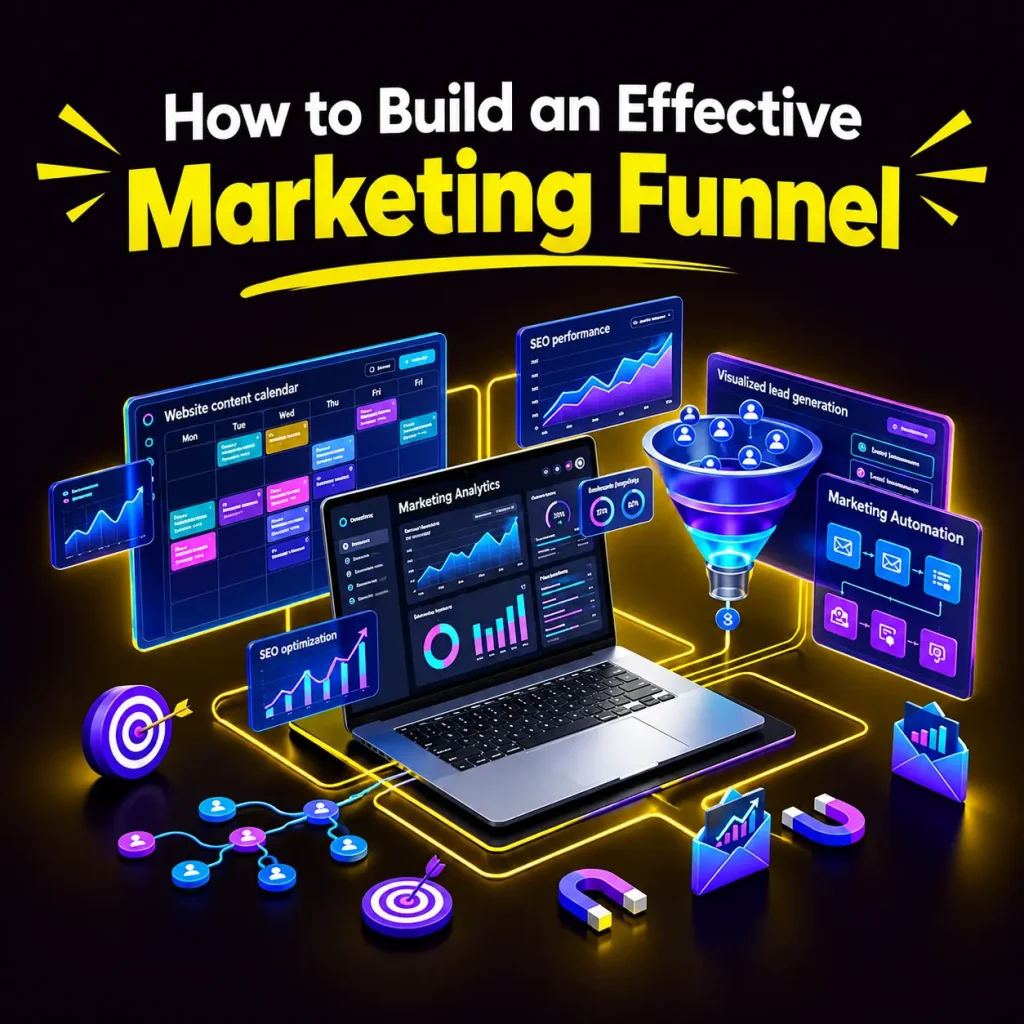
How to Build an Effective Marketing Funnel

Introductionn Not every person who comes to your website is prepared to buy your product or service away. Some people might be learning about your company for the time and others could be looking at different choices. A marketing funnel helps companies lead people along this path. It gives the information at different points from the very first time someone sees your brand to when they become a customer. A carefully thought out marketing funnel can help companies bring in the people create trust get leads and push for sales. Whether you have a business a startup or a digital marketing agency knowing how a marketing funnel works can help you develop a better marketing plan. What is marketing Funnel ? I see a marketing funnel, as a step‑by‑step path that shows how a marketing funnel can guide a person from just learning about a business to finally becoming a customer. The marketing funnel is often split into stages: Awareness Interest Consideration Conversion Retention Each stage has a role. The aim is to offer information and experiences that guide people smoothly toward taking a next step Why Marketing funnel is important ? A marketing funnel helps businesses understand the customer journey. Of sending the same message to everyone businesses can develop varied content and plans for people at different stages. For instance a person who has never heard of your brand may need learning material while a person who is already interested in your service may need price details, reviews or a chat, with a consultant. A marketing funnel can help businesses: – Draw in potential customers – Raise brand visibility – Collect leads – Build trust – Cultivate prospects – Boost conversions – Enhance customer relationships Understanding the Marketing Funnel Stages Awareness: Attract the Right Audience The first step is when people learn about your company for the time. They could discover you by searching on Google seeing you on media watching ads reading blogs watching videos or hearing about you from someone else. At this point the main goal is to get attention and make people notice your brand. Some good ways to do this include: SEO   Blog content Video marketing Google Ads Social media advertising content For example : a digital marketing agency can write a blog post titled  “What do you understand by SEO? Why Does Your Business Need SEO?”  This method helps the digital marketing agency get noticed by customers. At the time it gives people useful information that they can actually use. It’s a way to build trust and show expertise. Marketing Funnel: From Awareness to Conversion Once people know about your business the next step is to keep people interested. At this stage people may want to learn more, about your services, your products or your expertise. You can provide: Educational blog posts Guides Videos Social media content Newsletters Webinars Helpful resources The main goal is to give value and to give value to visitors encouraging visitors to explore your business.  Consideration: Build Trust At the consideration stage potential customers are actively thinking about whether your product or service fits them. Potential customers may compare businesses read reviews look at services or search for proof that you can solve their problem. – Customer testimonials – Case studies – Reviews – Service pages – FAQs – Demonstrations – Portfolio examples – Clear pricing information. Your website should also show why your offer matters to customers. Conversion Encourage action The conversion stage is where a potential customer takes an important action. This could be buying something setting up a meeting completing a form asking for a price or getting in touch with your company. To help with this step use calls, to action (CTAs). Examples include: Get a Free Consultation Request a Quote Contact Us Book a Call Get Started Learn More.  When people can act quickly and easily the conversion process becomes smooth. Retention: Keep Customers Connected The sales process does not have to stop once someone buys something. The sales process can continue even after someone buys something. Creating a lasting connection can be a part of a sales plan. Businesses can stay connected through: Email newsletters Helpful updates Customer support Loyalty programs Personalized offers New product information Educational content Good communication can help businesses maintain relationships with existing customers. Step to build an effective marketing funnel Understand Your Target Audience Understand Your Target Audience I think before you begin creating your sales funnel you should first decide who you want to focus on. Find out what they need what problems they have, what they are interested, in and what questions they ask. How they buy things. The more you know, about your audience the easier it is to create content that truly matters to your audience. Define Your Marketing Goals Decide what you want your funnel to do. Your objectives might be: Getting people to visit your website Creating new leads Receiving more questions or interest Selling more products Building your email list Making customers interact more with your brand starts with having objectives. When you know what you want to reach it becomes much easier to pick the ways. It also helps you follow your steps and watch how you are doing. Create Content for Every Funnel Stage Different customers need kinds of information. For instance: Awareness: Blog posts, social media posts, videos Interest: Guides, newsletters, educational content Consideration: Case studies, testimonials, service pages Conversion: Contact forms, consultations, offers, clear CTAs Retention: Email updates, resources, customer support.  Making content for every stage helps lead people along their customer journey. Choose the Right Marketing Channels I think you do not need to use every marketing channel. Instead pick the places where the people you want to reach spend their time. Depending on your business these could be: Search engines Social media Email Google Ads Websites Video platforms Content marketing A focused strategy can be easier to manage and measure. Create Calls to Action I think every important page should give
Digital Marketing

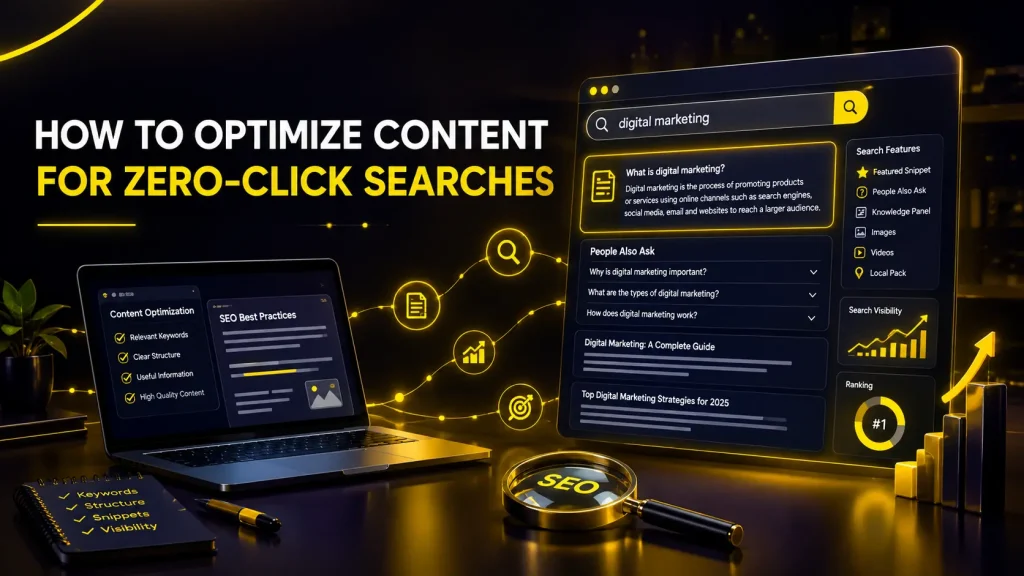
How to Optimize Content for Zero-Click Searches

Introduction Search behavior is changing. People today often look for information on Google. Without going to website if you find your answer on search engine result page that is possible with zero-click . For example someone might search for “What’s digital marketing?” Google could show an answer, at the top of the results. The person gets the information they want without clicking on any website. This does not mean that SEO is becoming less important. Instead companies need to make content that can show up in parts of the search results. Making content that works for zero-click searches can help your brand be seen create trust and connect with people even if they do not go to your website. What Does Zero-Click Search Mean? Zero-click search is when you find the answer right on the search engine results page. This means you don’t have to click on any result to get what you need.. Google can show information in ways including: Featured snippets People Also Ask Knowledge panels Local results Image results Video results Direct answers Other SERP features For example if someone searches “How many days are in a year?” the answer might appear directly at the top of the results. The main goal of zero-click SEO is not just to get clicks to your website. It is also, about making your content visible where people are already searching for answers. Why Are Zero-Click Searches Important? Zero-click optimization can help businesses: Increase search visibilityImprove brand awarenessBuild credibilityAnswer customer questionsReach users earlier in the buying journeyImprove overall content quality Even when a user does not click immediately, seeing your brand in search results can help them recognize your business. How to Optimize Content for Zero-Click Searches Answer the Main Question Clearly The first step is to figure out what the people reading your content are looking for. Of starting with a long explanation before giving an answer make sure the answer is clear and easy to find early on. For example if your heading is:  What Is Email Marketing? Start with an answer:  Email marketing is a marketing method. Email marketing uses email to communicate with customers promote products or services share information and build long-term relationships. I find email marketing, for staying connected with customers. After giving the answer you can add information. This way of writing helps people understand your content faster and also helps search engines find your content easily. Target Question-Based Keywords Many zero‑click searches arise from questions. People commonly search using phrases such as: What’s digital marketing? How does SEO work? Why is content marketing important? How to improve website traffic? What are Google Ads? How does email marketing work? Research the questions that your audience often asks and then create content, around those email marketing questions. You can also use question‑based headings such, as: What do you understand ny SEO? How Does SEO Work? Why Is SEO Important?  Is Businesses Improve by SEO? Create short direct answer  For questions that need an answer don’t add extra words at the start. A good way to handle it is to give an answer and then go into more detail. For example:  What Is SEO? SEO or Search Engine Optimization is the process I use to improve a website. SEO can then appear prominently in search engine results. Attract organic traffic. Then go on to explain SEO techniques, benefits, examples and best practices below. This way readers get the point quickly. Also have the chance to learn more if they want Use Clear Heading and Subheading Use Clear Headings and Subheadings Good content organization is important for zero-click optimization. Break large sections into smaller sections using:  H1 for the main topic H2 for major sections H3 for supporting topics For example:  H1: How to Edit or change Content for Zero-Click Searches H2 : What Are Zero-Click Searches? H2 : Why Are Zero-Click Searches Important? H2 : How to Edit or change Content for Zero-Click Searches H3 : Answer Questions Use Structured H3 : Content Optimize, for Featured Snippets This structure helps make your content easier to read and easier to understand for Snippets Optimize for featured Snippets May give a direct answer to a user’s question. I find them handy when looking for facts. Common types include: Paragraph snippets List snippets Table snippets If you want content to be easy to understand try using paragraphs, numbered lists, bullet points and clear definitions. I find this approach helps readers to follow ideas smoothly. For example if you are explaining the benefits of SEO use a list: – { Increases online visibility – Helps attract relevant traffic – Builds brand awareness – Supports long-term organic growth – Helps users discover useful content}. There is no guarantee that Google will choose content, for a featured snippet but clear formatting can make information easier to understand and pull out .  Use the People Also Ask Format The People Also Ask section can show related questions that users frequently search for. You can create sections that answer related questions around your main topic. For example:  for an SEO article: What Is SEO? I wonder why SEO is essential, for a website . I often ask how long SEO results can take. I need to understand the types of SEO. How Can Beginners Start SEO? Answer each question clearly and avoid unnecessary repetition. This approach can help you cover different search intents around one topic. Use Lists and Tables Where They Make Sense Add some questions What is a zero‑click search? A zero‑click search is a search where the user receives the information they need right on the search results page. The user does not have to click on a website to find the answer. Does zero‑click SEO mean that website clicks are not important ? No. Website traffic is still important. Zero-click SEO is about making sure the information is visible in search results and helpful, for users . How can I optimize my content for zero-click searches? Write answers. Use

Digital Marketing

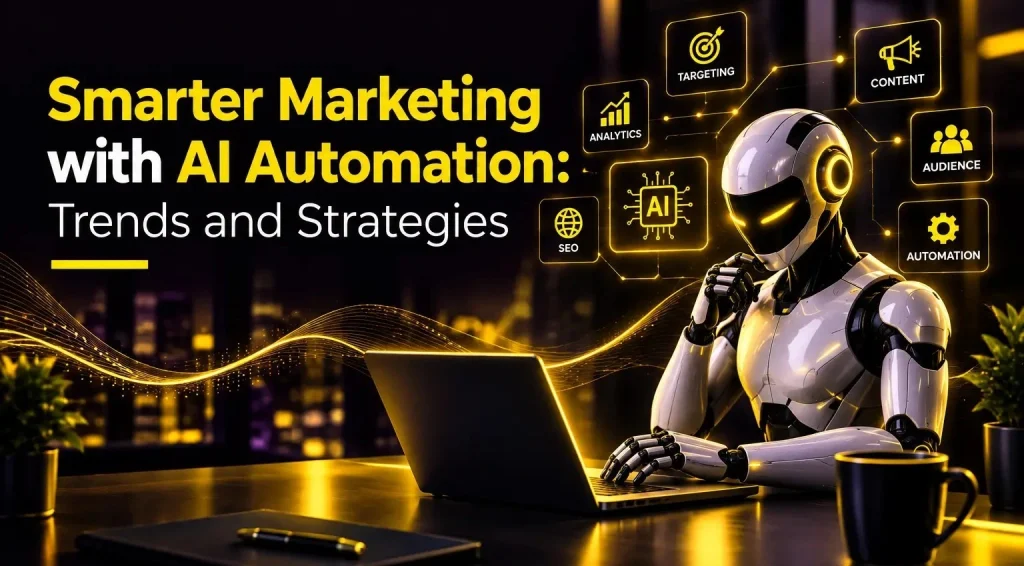
Smarter Marketing with AI Automation: Trends and Strategies

Introduction of Marketing Automation Digital marketing is evolving fast. Ai marketing automation is playing a big role in this change. By 2026 companies are using intelligence to handle routine marketing jobs read customer actions customize messages boost ad performance and act more quickly. Teams no longer have to manage every step by hand. AI helps with writing content sorting customers, running email campaigns generating reports tuning ads and interacting with customers. Recent marketing research, from 2026 shows more marketers are using AI for personalization and automation. AI-powered search tools and agentic marketing workflows are also growing in importance. Still smarter marketing doesn’t mean replacing people with machines. The real strength comes from mixing AI automation with creativity, smart strategy and deep customer insight. What Is AI Marketing Automation? AI marketing automation is when we use tools to run marketing tasks automatically. AI marketing automation helps us make those tasks better and gives help with marketing work. I see how traditional marketing automation follows rules that are already set. Traditional marketing automation can send a customer an email automatically after the customer signs up for a newsletter. Traditional marketing automation keeps the process simple and predictable. AI automation can go further. It can analyze customer behavior identify patterns personalize messages generate content and help determine what action should happen next. For example : AI- powered marketing system may:  Analyze customer interests ,  Segment audiences , Personalize email content ,  Generate content ideas ,  Automate customer  responses , Analyze campaign performance , Identify potential leads , Recommend marketing actions  , Modify the advertising campaigns . Modify the advertising campaigns  making the growth on market and increase workflows faster and more responsive. Why Is AI Automation Important in 2026?  Marketing teams are asked to make content talk to more people through different ways and answer customers quicker. Artificial intelligence can help companies handle this increasing amount of work. According to HubSpots 2026 marketing research using automation is one of the marketing trends and using artificial intelligence to personalize messages is also very common. At the time Google talks about a change, in how AI is used. Of just helping with daily tasks AI is now doing more active work. Marketers can tell AI what to do give it information and rules and check the results that AI produces This means AI automation is becoming more than a simple time-saving tool. It is increasingly becoming part of the overall marketing workflow. Top AI Marketing Automation Trends in 2026 AI-Powered Personalization I have seen that customers want content that fits their interests and needs. I have seen that AI can analyze customer information and help businesses create experiences at scale. For example : an online store can recommend products based on browsing behavior. An email campaign can show content to different customer segments. A website can provide information based on the visitors interests. AI makes personalization easier for marketing without creating every message. The HubSpots 2026 research shows that AI- personalized content is a marketing trend. Many marketers use AI to create experiences at scale. Why It Important ? I believe personalization can make marketing messages feel more relevant and useful. Of sending exactly the same message to everyone businesses can communicate with customers based on their interests and where they are, in the buying journey.. Automated Content Creation It can take a time to create content regularly. AI can assist marketers in generating. Blog ideas Social media captions Email drafts Content outlines Ad copy Product descriptions Video concepts Content variations This lets marketers spend time on boring writing and more time, on planning and coming up with new ideas. Content made by artificial intelligence must always be looked at by people. Marketers have to make sure the facts are right the style matches the brand the content is unique the feeling is correct and the information is helpful before it goes out. The aim is not just to create content. The goal is to create better and more relevant content. AI-Powered Email Marketing Automation Email Marketing Automation powered by ai AI automation is also useful in email marketing AI can help businesses understand customer behavior and create more relevant email campaigns. For example Business can automate: Welcome emails Promotional emails Follow-up emails Abandoned-cart messages Newsletter campaigns Customer re-engagement emails Product recommendations AI can also help marketers produce versions of an email, for different audiences. Of handling every customer interaction manually automation enables businesses to keep communication going through the entire customer journey. Smarter Customer Segmentation I have found that not every customer has the needs and each customer may have different needs.Ai can analyze customer information. Help separate audiences into meaningful groups. Ai can help a business see patterns, in customer behavior.For example a business might identify:– visitors. People discovering the brand for the first time.– Potential customers. People who have shown interest in a product or service.– Existing customers. People who have already purchased.Returning customers — People who frequently interact with the brand.Each group can receive different content and offers.Ai makes segmentation more dynamic because customer groups can be updated as new behavior and information become available. How AI Can Make Your Marketing Strategy Smarter Set Your Marketing Goals Before you begin automating a task decide what you want to accomplish. Your Marketing Goals might include: Generate more leadsIncrease website trafficImprove customer engagementIncrease salesReduce repetitive workImprove customer supportPersonalize communication Clear goals help businesses choose the right AI tools and workflows. Identify Repetitive Task  Take a look, at your current marketing activities and spot tasks that are repetitive.For example:  Creating reports , Sending follow-up , emails Scheduling , social posts , Answering common  questions , Organizing leads , Creating  content drafts . These tasks can be good starting points for automation. Keep Humans in the Workflow AI should support marketing teams rather than remove human judgment from important decisions. Humans should review content advertising messages, customer communication and strategic decisions. I believe Human creativity is especially important for storytelling, brand identity, communication and building

Digital Marketing

How AI Is Transforming Digital Marketing in 2026: Trends and Strategies

Understanding the Rise of AI Artificial intelligence is changing how companies do marketing. By 2026 Artificial intelligence is not used for simple automation. Artificial intelligence helps companies understand customers create content analyze data improve advertising personalize experiences and make marketing decisions. From intelligence powered search to automated advertising and personalized customer experiences companies can now use technology to reach the right audience more effectively. Google has also kept expanding intelligence powered Search adding AI Overviews and AI Mode and this changes how people discover and use information online. However Artificial intelligence does not replace creativity and human understanding. The best digital marketing plans combine intelligence, with human ideas, brand knowledge, creativity and customer understanding. What Is AI in Digital Marketing? AI in digital marketing means using intelligence tools to make marketing efforts better. These tools can handle amounts of data, spot trends and figure out what customers like to do. This helps marketers make choices. For example AI can show a business what people are looking for online. It can suggest products that match customer interests. https://skilloffice.info/wp-admin/post.php?post=9&action=elementor It can also come up with ideas, for content make emails feel more personal check how ads are doing and guess what a customer might do next. AI doesn’t take over marketing jobs. Instead it acts like a helper. It saves time. Makes marketing teams more effective. Why Is AI Transforming Digital Marketing in 2026 ? Digital marketing is becoming harder and harder every day. People are using search engines, social media, websites, videos, voice search, AI tools and other online places before they make a decision to buy something. Artificial intelligence is a tool that helps marketers handle this increasing difficulty by looking at information and finding patterns. Search is also changing; it is now more conversational and multimodal. Google reports that AI Mode queries are often much longer than traditional searches, while users increasingly search using images and voice. This means businesses need to create content that answers real customer questions instead of focusing only on short keywords. Top AI Digital Marketing Trends in 2026 AI-Powered  Search and SEO I see a change in digital marketing: the rise of AI‑powered search. I notice that search engines are getting better, at understanding the meaning and context behind questions. Users can ask longer conversational questions and get answers that are generated by AI. I notice that for businesses this means SEO is moving beyond keyword optimization. Websites should provide original, well‑structured content that directly answers customer questions. Businesses should focus on: Helpful and original content Natural language and conversational questions Strong website structure Relevant keywords and topics Clear answers to customer problems High-quality images and videos Strong user experience Google has also provided website owners with guidance and new Search Console insights for understanding visibility in its generative AI Search experiences. Personalized Marketing Experiences  Customers want brands to know what they need. Artificial intelligence can look at how customers act what they like, their interactions and their preferences so that companies can offer experiences that are tailored to each individual. For example an online store can suggest products by looking at what a customer has browsed. An email campaign can send messages to different groups of customers. A website can also show fitting content based on what a customer is interested, in. Personalization can make marketing messages more useful and relevant than showing the same message to everyone. AI-Powered Advertising AI is changing the way of digital advertising campaigns are made and improved. Modern advertising platforms can use by AI to look at signals make targeting, tailor ad messages and spot chances for better campaign performance. I see that this shift is already happening in small businesses. For example Googles AI Max for Search campaigns use AI powered search term matching and asset optimization to help advertisers reach searches and tailor creative messages. I find Googles approach helpful and easy to understand. This lets marketers spend time on repetitive campaign adjustments and more time on strategy, branding and customer experience. I believe this focus, on strategy can bring value. Smarter Marketing Automation Automation has always been important in digital marketing, but AI is making automation more intelligent. Businesses can automate tasks such as: Email campaigns Customer follow-ups Lead nurturing Social media scheduling Customer segmentation Reporting Chat support Campaign analysis AI-powered automation can also help businesses decide when to communicate with customers and what type of message may be more relevant. This can save time while allowing marketing teams to focus on creative and strategic work. AI Chatbots and Customer Support AI chatbots are becoming a part of customer communication. A chatbot can answer questions explain products or services help visitors navigate a website and collect basic information from potential customers. The biggest advantage is availability. Customers can receive assistance even when a business team is not available. However businesses should provide a way for customers to reach a human when their problem is complex or requires personal assistance. Predictive Analytics and Better Decision-Making Marketing produces a huge amount of data. Understanding this data can be difficult when done manually. AI can analyze customer behavior, campaign performance, website activity, and other marketing information to identify patterns and trends. This can help marketers understand: Which campaigns are performing well Which audiences are responding Which content attracts attention Where customers leave the buying journey Which marketing activities need improvement Instead of making decisions based only on assumptions, marketers can use data and AI-supported insights to make more informed decisions AI for Social Media Marketing Ai is also changing media marketing. It helps marketers come up with content ideas look at how audiences engage, spot trends, plan content calendars and make versions of social media posts. AI can also help businesses see which topics and types of content are getting the attention.. Even with all this power successful social media marketing still needs a human voice. Brands should use AI to work smarter but they must keep their communication real, honest and connected to their audience.

Digital Marketing

A Complete Guide of Digital Marketing

Skilloffice / Blog Digital Marketing: A Complete Guide This article shows how online channels truly bring customers to a business. It is written for owners, students and beginners. It avoids jargon Publishing details SEO headline Digital Marketing: A Complete Guide for Beginners and Businesses Meta title Digital Marketing: A Complete Guide for Businesses 50 characters Meta description A complete digital marketing guide covering SEO, social media, ads, email, strategy and metrics, written for small businesses and beginners. 141 characters URL slug /digital-marketing-complete-guide/ Primary keyword digital marketing Secondary keywords digital marketing strategydigital marketing servicesdigital marketing agencyonline marketinginternet marketingdigital advertisingSEOsearch engine optimizationsocial media marketingcontent marketingemail marketingGoogle AdsPPC advertisinginfluencer marketingweb marketingdigital marketing for small businessesonline brand visibilitydigital marketing trends On this page What is digital marketing? How it works Main types Why it matters Benefits Building a strategy Metrics to track Mistakes to avoid Trends to watch FAQs Work with A customer searches for a service on their phone, taps one of the first results, reads a page, and books an appointment — all in under three minutes. Nothing about that moment is accidental.Every step was influenced by marketing. Most business owners already feel that they need to do online. What they usually don’t have is an idea of how the parts come together: which channel does what what a realistic budget looks like and how to know if any of it is working. This guide gives you that picture. Digital marketing covers what digital marketing is, how digital marketing works in practice and the main types of marketing. Digital marketing explains how to build a marketing strategy. Digital marketing lists the numbers tracking for digital marketing. Digital marketing points out the mistakes that waste the money in digital marketing. No formulas, no guarantees — just how the work is actually done. What Is Digital Marketing? Digital marketing is about making a business, product or service visible Digital marketing uses tools such, as search engines, websites, social media, emails, videos and mobile apps. I believe digital marketing can help small businesses reach customers Paid ads to do this. The main idea stays the same, as marketing. Find the right audience build trust with them and get them to make a purchase. The tools are simply different. How it differs from traditional marketing A newspaper ad is seen by everyone who opens the paper. You pay for the space. You almost never find out who actually saw it. Online marketing is the opposite. You can show a message to people in one city, who are, in a certain age group and who recently looked for what you offer. After that you can see how many people clicked, how long they. How many made a purchase. That feedback loop is the difference: digital advertising can be changed while it is running. A simple example A bakery that starts a food blog, posts photographs of the day’s bread on Instagram, appears on Google Maps when someone searches for “bakery near me”, and emails weekend offers to past customers is doing four kinds of digital marketing at once — without ever using the phrase. How Does Digital Marketing Work? Underneath the tools, the process is consistent. Five steps, repeated and refined. Identify your target audience Before choosing a platform, describe who you are selling to: their age, location, budget, the problem they are trying to solve, and the words they use to describe it. A guessed audience leads to wasted spend, because every later decision depends on this one. Choose the right digital channels People act differently depending on where they’re. A person typing “emergency plumber” into Google wants a solution immediately.. Someone scrolling a social feed is not shopping at all. Search suits urgent, intent-led demand; social suits discovery and brand-building; email suits people who already know you Create valuable content Content is what occupies the channel — a service page, a how-to article, a short video, a product photo, a comparison guide. Useful content earns attention. Content written purely to contain keywords rarely holds anyone’s interest, and search engines have become good at telling the difference. Reach and engage your audience Reach can be earned through search rankings and shares, or bought through paid placements. Most businesses use a mix. Engagement — replies, saves, sign-ups, enquiries — is the signal that the message landed with the right people. Measure and improve results Analytics tools show the pages, the ads and the emails that brought results and the ones that did not. I keep the pages that work. I keep the ads that work. I keep the emails that work. I stop the pages that do not. I stop the ads that do not. I stop the emails that do not. Main Types of Digital Marketing Search engine optimization (SEO) SEO is the work of improving a website so it appears in unpaid search results when people look for related topics. It has three parts.I find that Technical SEO keeps a site fast, safe, mobile‑ready and easy for search engines to understand. On‑page SEO covers titles, headings, page content and internal links. Off‑page SEO covers the links a site earns from credible websites. SEO is slow to build and cheap to maintain. Rankings are never promised — search results shift constantly — but a page that answers a real question can keep bringing in visitors for years after it is published. For most small businesses, this is the highest-value long-term investment in online brand visibility. Social media marketing Social platforms are places where a brand becomes familiar. Businesses post updates, answer questions, show businesses work. Run targeted campaigns, on Instagram, Facebook, LinkedIn, YouTube and other sites. Pick platforms by the people who use them not by how many people use them. A B2B consultancy should be on LinkedIn because that is where its audience is. A boutique retailer should be on Instagram because that is where its audience is. Posting consistently on a platform is better, than posting occasionally on five different platforms. Content marketing

Scroll to Top