Introduction
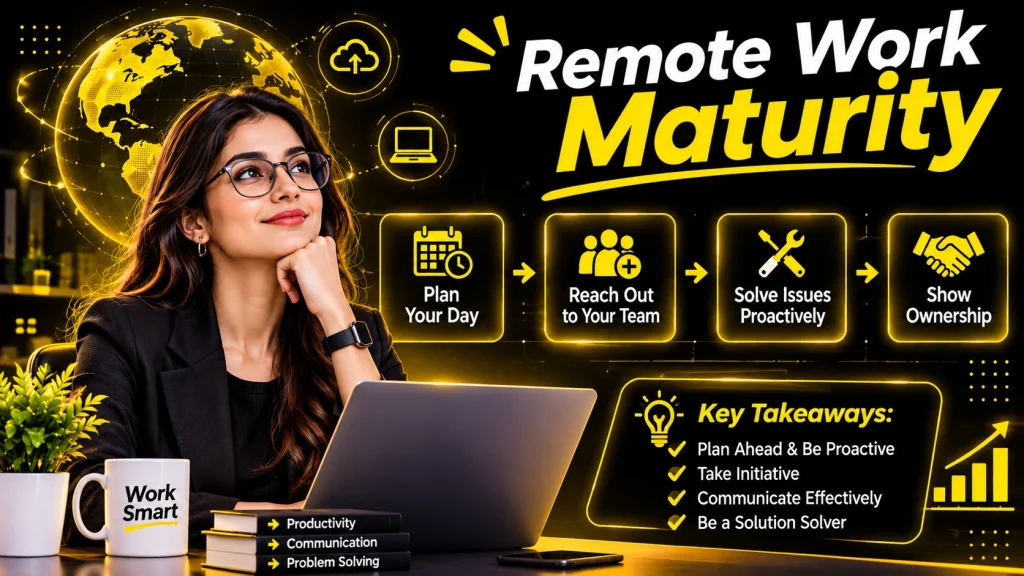
A hiring manager once told me about a candidate she almost didn’t hire because his technical marketing skills were just okay compared to people. What made her change her mind was one part of the interview. He explained how he planned his day how he reached out to a team before they even asked and how he fixed a misunderstanding all on his own without waiting for someone else to see it first. Technical skill got him considered. Remote work maturity got him hired.
This final post of our series shifts focus slightly from marketing-specific knowledge to something increasingly just as important in today’s job market — the practical skills that make someone genuinely effective working remotely.
Why Remote Work Skills Matter So Much Today
Remote work skills have become very important because more companies are using ways to work and hiring people from different places. Companies now depend on communication, online teamwork and technology to run their daily activities.Because of this employees need more, than knowing their job to do well in remote jobs.Skills, like being able to talk manage time be disciplined solve problems and understand technology help people get their work done well without someone watching them. These skills also help people work well with others meet deadlines learn tools and keep being productive.No matter if someone is a student, a worker, a freelancer or someone who has worked for a time building work skills this can lead to job chances. Help them stay ahead in today’s changing job world.
Essential Skills Every Successful Remote Worker Needs
I have seen that companies search for skills when hiring people to work from home. These skills keep workers reliable even when they are not, in the office.
Communication Skills
Communication is one of the important parts of remote work. When people work from places they can’t always talk in person. So they have to share their thoughts through emails, video meetings, chat apps and project management tools.
Good communication helps avoid confusion. It makes teamwork easier.. It keeps everyone up to date on how projects are going.
Time Management and Organization
Remote employees often have flexibility in managing their schedules.. That flexibility can become a challenge if there is no proper planning. Successful remote workers organise their tasks. They prioritise responsibilities. They also complete assignments, within deadlines. Using calendars helps keep track of time. Task managers help stay on top of work. Productivity tools make daily work easier. All of these tools support organization and focus.
Technical Skills
Remote work relies a deal on technology. Employees need to learn how to use computers. They need to learn how to use communication platforms. They need to learn how to use cloud storage. They need to learn how to use software that’s specific, to their industry.
The amount of knowledge required depends on the job role. Employees may need to learn:
– Microsoft Office and Google Workspace.
– Zoom and Google Meet.
– Slack and Microsoft Teams.
– Trello, Asana and project management tools.
– Industry‑specific tools and software.
Employees who are comfortable, with technology can finish tasks quickly and can adjust to new working systems faster.
Problem-Solving Abilities
Remote employees sometimes face issues, problems or delays in communication.
Of waiting for someone else to fix everything successful professionals take the time to understand what is going on. Successful professionals look for ways to handle the situation. Let others know when successful professionals need help.
Strong problem-solving skills show that a person can work on a person and take responsibility, for a person work.
Self-Motivation and Discipline
That are important when working from home.Working from home can have distractions, unexpected interruptions and not much supervision.
Employees who are motivated, on their stay focused. Employees stick to their schedules. Employees finish their tasks when no one is watching Employees doing the tasks.
Making a routine can help improve focus and get more work accomplished.
How to Stay Productive While Working Remotely
The routine must help them stay focused. The routine must help them finish their work on time.A special place to work a schedule, clear goals and attention to tasks all help increase productivity. Being, in a place to work makes a big difference. Having a schedule helps keep things on track. A schedule keeps things on track. Digital helpers, like Google Calendar, Trello and Asana can also organize jobs. Digital helpers can also organize jobs. Show progress. Regular breaks, cutting out distractions and keeping a work-life mix are just as vital.With these habits remote employees can handle duties better keep performance and reach stronger results.
Digital Tools That Help Remote Employees Work Better
Technology makes remote collaboration possible. From online meetings to project management, digital tools help employees communicate, organise tasks, and complete projects efficiently.
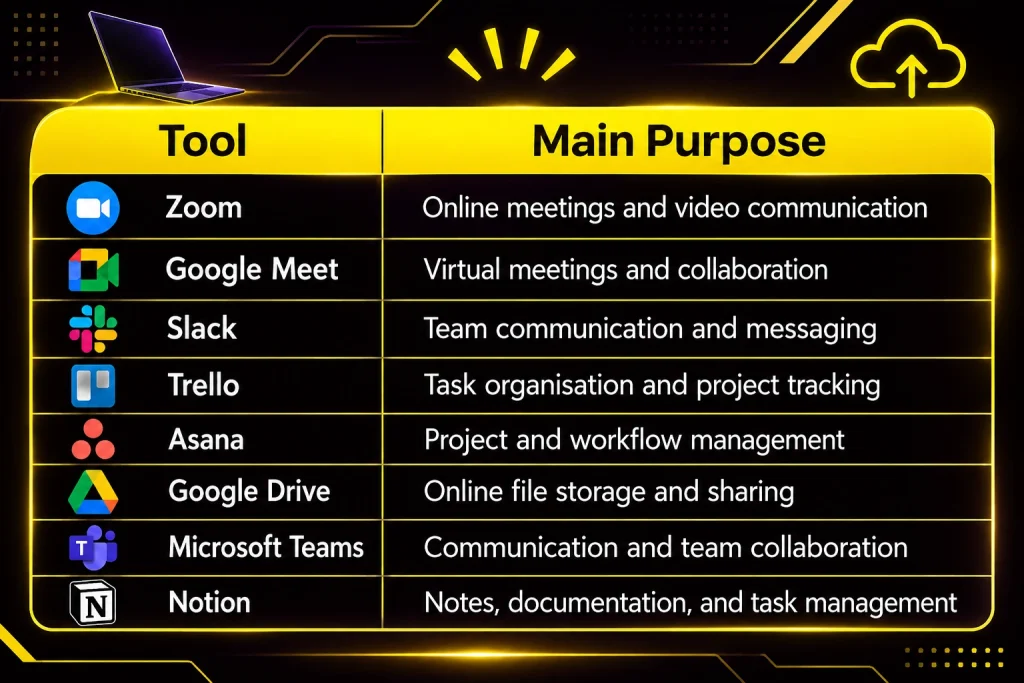
Learning these tools helps beginners feel more comfortable when working from home.
You do not have to master every tool, at once.
Begin with the platforms that’re most common in your field and then slowly broaden your skill set.
Common Challenges of Remote Work and How to Overcome Them
Remote work offers flexibility, but it also comes with challenges that can affect performance and professional development.
Understanding these challenges can help employees prepare better and develop effective solutions.
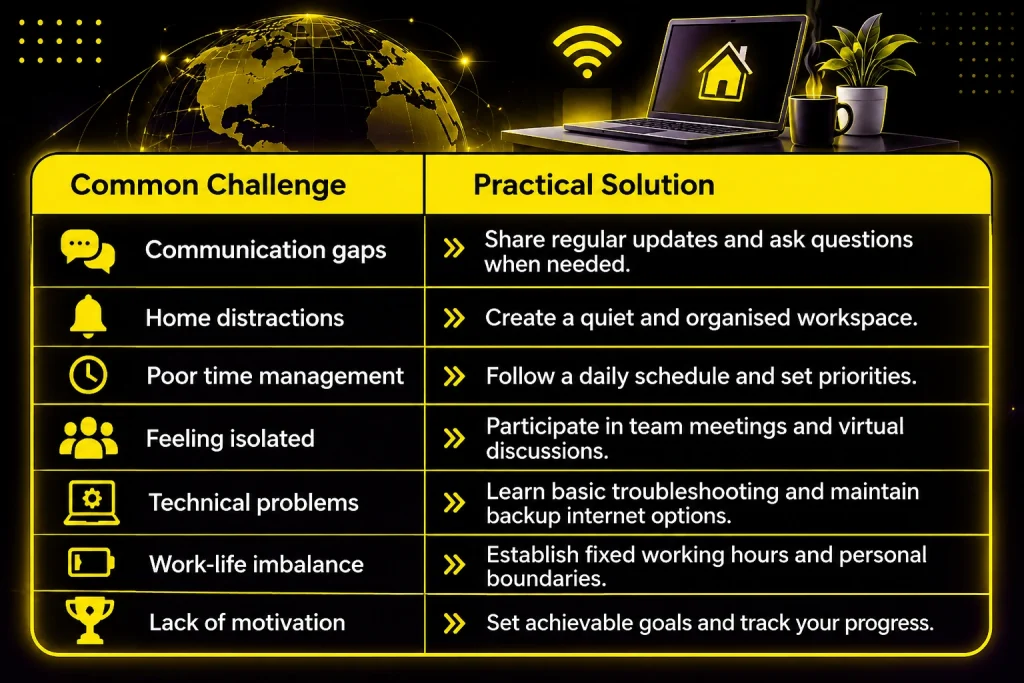
Remember that becoming successful in remote work takes time. Developing good habits and learning from everyday challenges can gradually improve your professional performance.
How to Build a Successful Remote Career
Building a career is not, about finding a job where you can work from home. Building a career takes effort. It also means you have to prove that you can handle your time and your tasks, on your own without someone keeping an eye on you.
Identify Your Career Interests
I find that this simple plan helps many people find a job that feels right.
Some popular remote jobs include:
– Digital Marketing Specialist.
– Content Writer.
– Graphic Designer.
– Social Media Manager.
– Web Developer.
– Virtual Assistant.
– SEO Executive.
– Customer Support Executive.
Develop Job-Ready Skills
Choose a career field and focus on developing the skills required for that role.
You can learn through online courses, tutorials, practical assignments, and professional training programmes
Build a Professional Portfolio
A portfolio is a proof of your skills.A portfolio is a proof of your skills.
If you are a beginner a portfolio can start with sample projects. If you are a beginner a portfolio can include projects. If you are a beginner a portfolio can add practice assignments. A portfolio shows your skills.
For example an aspiring digital marketer can create a sample SEO strategy.
Gain Practical Experience
Practical experience helps you understand how professional projects work. Focus, on improving your work quality and learning from feedback
Apply for Relevant Remote Jobs
Search for opportunities on platforms such as LinkedIn, Indeed, Naukri, and remote job websites.
Prepare a professional resume, highlight your relevant skills, and customise your applications according to each job description.
Final Thought
A successful remote career is built through continuous learning, consistent performance, effective communication, and professional responsibility. The more you improve these qualities, the better prepared you become for long-term remote work opportunities.
You Can Find All Answers Here
Self-discipline, communication, time management, technical knowledge, adaptability, and accountability are some of the most important qualities that help someone succeed in a remote job.
Communication, organisation, problem-solving, time management, self-motivation, and digital literacy are essential skills for remote employees.
Yes. Beginners can find remote opportunities in digital marketing, content writing, graphic design, customer support, virtual assistance, and other fields by developing relevant skills.
Create a daily routine, set achievable goals, maintain a dedicated workspace, take regular breaks, and track your progress to stay motivated.
Popular remote work tools include Zoom, Google Meet, Slack, Trello, Asana, Google Drive, Microsoft Teams, and Notion.