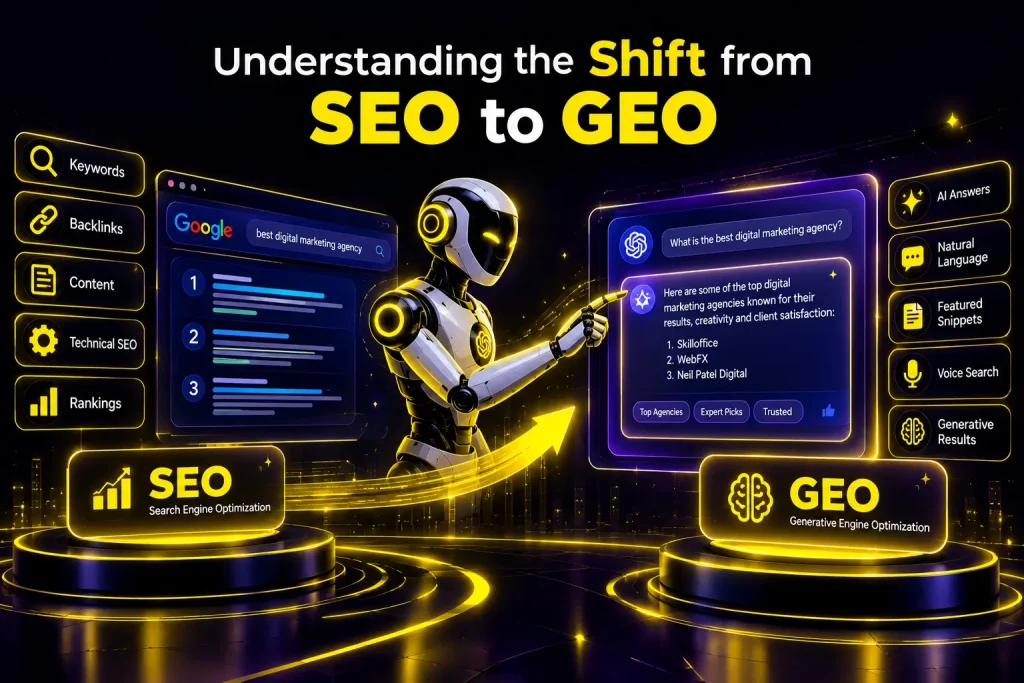
Understanding the Shift from SEO to GEO
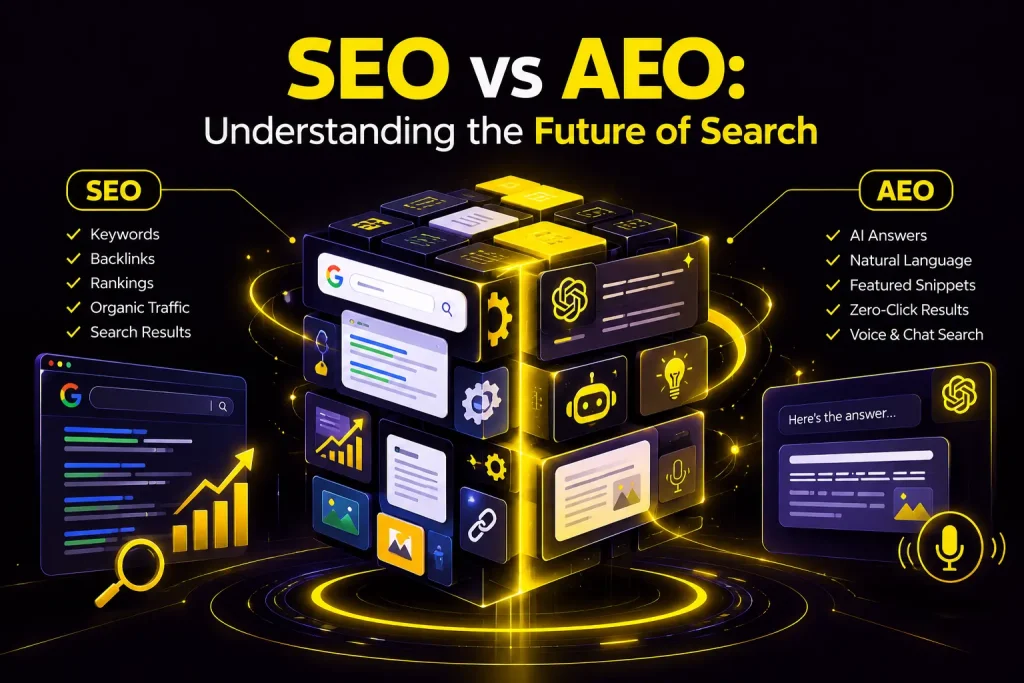
Introduction For, than twenty years brands focused on one main goal when building their online presence: getting higher on Google’s rankings. They used keyword strategies ran link-building campaigns and spent a lot of time adjusting tags. This was how digital marketing worked. But something fundamental is breaking that formula. AI assistants such, as ChatGPT, Claude and Googles AI Overviews are providing answers away sometimes without taking people to any website. This change has created a method called Generative Engine Optimization or GEO. Rather than competing for a ranking position, businesses now compete to be the source an AI model chooses to reference, paraphrase, or recommend. This isn’t a passing trend — it’s reshaping how visibility works online, and companies that ignore it risk becoming invisible in conversations happening entirely inside a chatbot window. Defining GEO in Simple Terms GEO means shaping content so that AI systems see it as trustworthy, useful and worth mentioning when they create an answer. I think GEO is about making the content clear and helpful for AI. Traditional SEO is about making content, for web crawlers and ranking algorithms. I believe SEO helps the content appear higher in search results. What Is Driving the Evolution of Search Engines? Search results are being replaced by generated summaries. I have noticed that Google now places overviews above standard listings for a large portion of queries. Google places AI‑written overviews above listings for many queries and users frequently get their answer without ever visiting a page Chat-based tools are becoming go-to research destinations. People are turning to conversational AI instead of typing queries into a search bar. These tools don’t hand back a page of links — they deliver one condensed answer, occasionally backed by a few source citations. Credibility is measured differently now. Language models don’t just count backlinks. Look for how often a keyword appears.I see that people pay attention to how the information’s written. They check if the facts line up between sources and if the information makes sense in a clear logical way. Getting AI to trust your content is no longer, about tricks or small technical changes. How Businesses Can Optimize Content for AI-Powered Search Prioritize plain direct answers. AI models like content that answers a question fast and clear. Split information into sections with headers, bullet points and tables that are simple to read and copy. Keep your facts uniform everywhere. Language models often verify claims by checking sources.Make sure your company details, pricing, statistics and messaging stay the same on your website. Keep them the same on channels, directories and review platforms. Focus depth over breadth. Of spreading thin across many unrelated topics concentrate on becoming a recognized authority within a specific niche through thorough well-researched material. Implement data markup. I find that when you use schema and when you use formatting, search engines and AI systems can understand your content better. Earn visibility on platforms. AI tools often gather information from community forums review sites and trade publications. Genuine mentions and endorsements, in these spaces boost your chances of being referenced Track how AI represents your brand. Just as marketers monitor keyword positions they now need to track how and how accurately. Their business appears in AI-generated responses. New monitoring tools make this easier and staying ahead of this trend gives an advantage. Frequently Asked Question ? Is GEO going to replace SEO completely? No.SEO still matters. AI tools use many of the trust signals that search engines use like site quality, authority and clear writing.GEO works on top of SEO. It does not replace SEO. 2. How do I know if AI tools are actually mentioning my business? Start manually — ask ChatGPT, Claude, or Perplexity questions a potential customer might ask about your industry and see what comes up. A few dedicated GEO-tracking tools are also starting to emerge that monitor this more systematically, similar to how rank-tracking tools work for SEO 3. Do I need to rewrite all my old content for GEO? Not always. Begin by looking at your performing pages or the ones that matter the most. Check if those pages answer questions clearly and right at the start. Final Thoughts The shift from SEO to GEO reflects a change, in how people look for information and decide what to trust. When AI tools are used more and more to find answers companies that are clear, consistent and show expertise are the ones that language models are likely to pick as reliable sources. Success in this new landscape won’t just mean ranking well — it’ll mean becoming the answer itself.