October 27, 2026

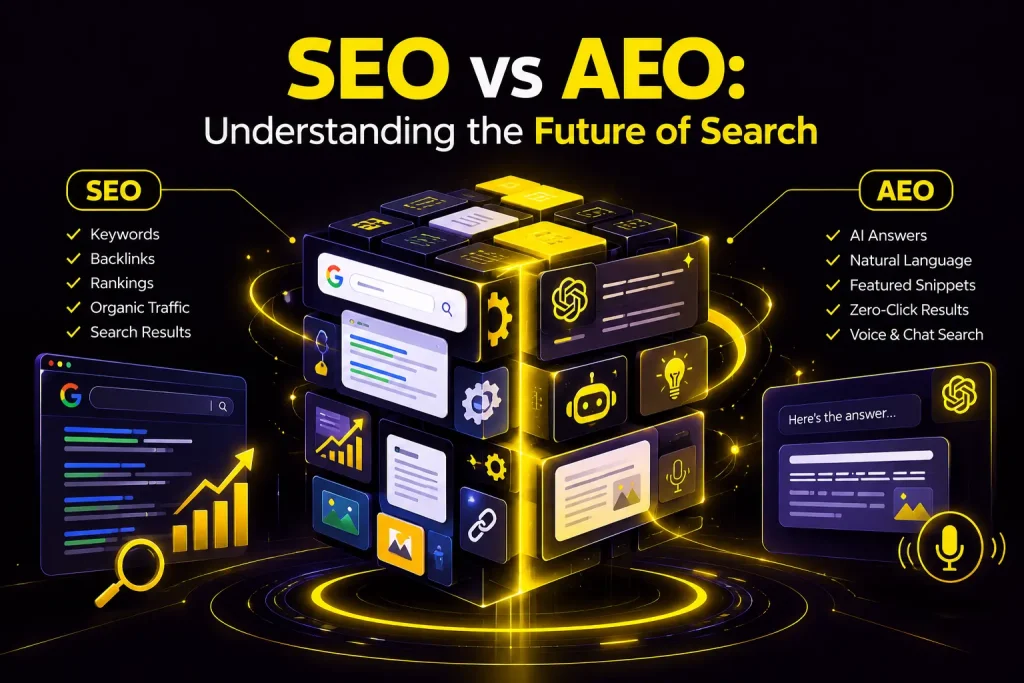
Futuristic SEO vs AEO illustration showing traditional search rankings and AI-powered search answers.
SEO ( blog )

SEO vs AEO: Understanding the Future of Search

Introduction SEO (Search Engine Optimization) focuses on improving a website’s visibility and rankings in traditional search engines like Google. AEO (Answer Engine Optimization) focuses on optimizing content so that search engines and AI-powered platforms can understand, extract, and provide it as a direct answer to users’ questions. This is where keyword research becomes important. Keyword research is a method, for finding, studying and selecting the search terms that match the website, the business and the people that you want to reach. Keyword research guides you in picking the search terms for the audience you aim to attract.It helps you make content that answers the questions people ask and links your business to the people. However good keyword research is not, about picking the most popular words. It also means knowing why people search, looking at how many others use the words finding long-tail keywords and spotting shifts in how people search. In this guide we will look at why keyword research matters, the latest SEO trends, hands‑on strategies, tools and the common mistakes to avoid. This will help you build a search engine optimization strategy. SEO vs AEO — 5 Key Differences Goal I see that SEO focuses on improving website rankings in search results. SEO is, about making a website appear higher in search results. I see that AEO focuses on making content suitable for answers. Search Behaviour I see that SEO targets keywords people type into search engines. I see that AEO targets questions and conversational searches people ask. I see that SEO is about keywords, headings, links and content that is set up to perform well on search engines. I see that AEO is, about giving organized answers to questions. Search Experience I see that AEO seeks to provide information directly inside the search experience itself. Overall Strategy I see that SEO builds long‑term search visibility. I see that AEO expands visibility into AI‑powered and answer‑focused search experiences. The Power of SEO + AEO in Modern Digital Marketing Wider Online Visibility Combining SEO and AEO helps businesses make their content work well for search results and also for new answer-focused search experiences. This way content shows up in places and reaches more people. It’s about being ready, for how people search today and tomorrow.   Better User Experience   Answering users’ questions clearly helps visitors find relevant information faster and makes website content easier to understand.   Stronger Brand Authority   Consistently publishing useful and reliable information can help a business establish greater credibility around the topics related to its products or services.   Future-Ready Content Strategy   Search is becoming conversational and AI-powered. Combining SEO, with AEO really helps businesses adapt their content strategy to ways people discover information. With SEO and AEO companies can stay ahead in a changing search landscape. Frequently Asked Questions (FAQs) Is AEO replacing SEO? No. AEO is not a replacement for SEO. Both approaches can work together to improve a business’s visibility across traditional search and newer answer-focused search experiences. 2. Why is AEO becoming important? As people ask questions in a conversational way and use search tools that are powered by artificial intelligence companies must create content that gives clear answers and shares helpful and easy to understand information. 3. Should businesses use both SEO and AEO? Yes.Using both approaches can help businesses create content that supports search visibility while also getting ready, for the increasing importance of AI and answer-focused search. 4. Can existing SEO content be optimized for AEO? Yes. Existing content can be improved by adding clear questions, concise answers, useful context, and better content structure. 5. What type of content works well for AEO? Using both approaches can help businesses create content that supports search visibility while also getting ready, for the increasing importance of AI and answer-focused search. CONCLUSION Search is moving away from ranking systems to direct answers and answers made by AI.SEO remains essential for keeping a website visible. AEO makes content clearer and more helpful, for searches that want answers. Companies that use both SEO and AEO can reach people with search styles strengthen their online presence and produce content that truly answers what customers ask.
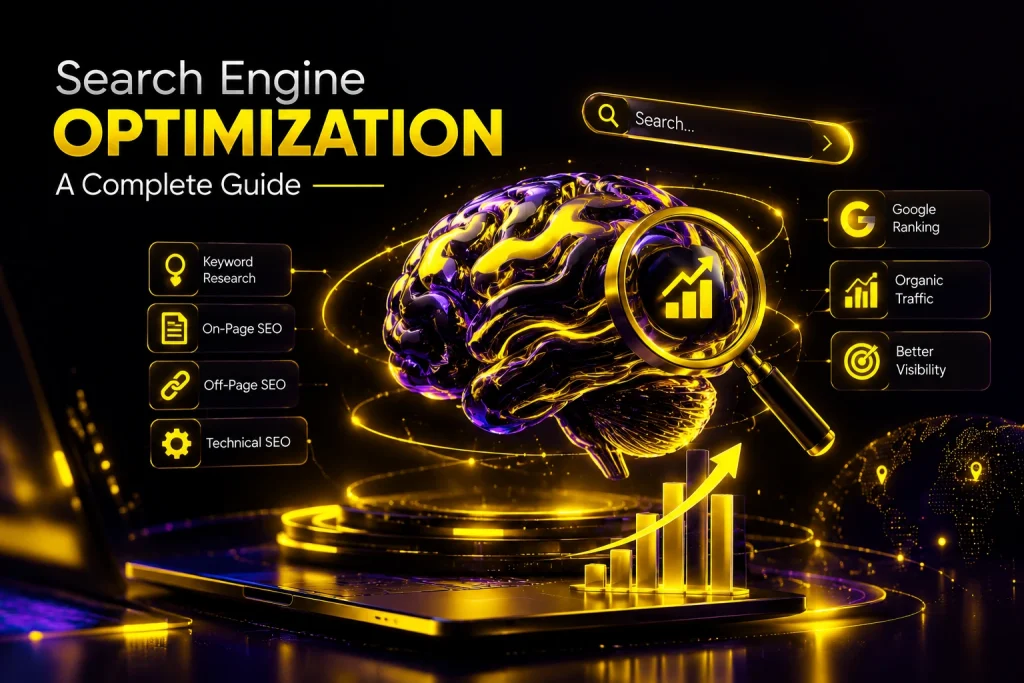
Futuristic SEO brain with a magnifying glass, keyword research, and digital growth analytics in neon yellow and purple.
SEO ( blog )

Search Engine Optimization: A Complete Guide

Introduction In today’s world having a website is just the start. It’s not enough to build one and expect people to find it. For a business to grow online people need to come across your site when they search for what you offer. Whether that’s a product, a service or helpful information. That’s where Search Engine Optimization or SEO comes in. SEO helps boost your website’s visibility, in search engine results. It brings in visitors who are already looking for what you provide. It’s not magic. It’s work. You make your site better so search engines like Google can understand it and real people can find what they need. If you run a business look after a website or put out online content knowing SEO can make a real difference. It’s about improving your content, how your site is built how it loads and how trustworthy it seems. All of these things help your pages rank higher and get noticed. In this guide we’ll go over what SEO really is. We’ll explain how it works, the types of SEO why it’s helpful and the steps you can take to make your website easier to find in search results. What Is Search Engine Optimization (SEO)? Search Engine Optimization, which many people call SEO is the method of making a website so that it appears higher in search engine results that do not cost money. Those results are also known as search results because businesses do not pay for every click that comes from them. I have seen that Search Engine Optimization makes a website easier to find easier to understand and easier to navigate. Search engines like Google look at web pages to learn what they are about and decide which pages fit a user’s search best. For example if a person searches for ” digital marketing agency,” a website that has been well optimized for digital marketing services may show up in the relevant search results. Still the ranking of a website depends on factors, such, as how relevant the page is, how good the content is, how much competition there is and how useful the page is overall. Why is SEO important? Website helps potential customers find your website. Website creates chances to bring in people who are looking for your content or services. I see how the website helps people use your website and find what they need. Website builds recognition for your brand. Website makes your website seem trustworthy. Website allows companies to connect with people who are looking for what they offer. SEO is an ongoing process rather than a one-time activity. Search trends, competitors, website content, and search engine systems can change, so websites need regular monitoring and improvement. How Does Search Engine Optimization Work? Search engines use automated systems to discover, understand, organize, and rank web pages. Understanding these processes helps you create a website that is easier for search engines to access and more useful for visitors. Crawling Crawling is the way search engines scan the web. Crawling happens when automated programs work to find web pages. Crawling can follow links read sitemaps or look at URLs that were already known. To help search engines discover your content you should build a website structure. Use internal links. Keep a XML sitemap. Indexing Once a search engine finds a page it looks at the page’s words, pictures, videos and other details to decide if the page should be saved in its index. If a page is not put into the index indexing is. The page will not show up in normal organic search results. You can help indexing by putting content on your site by not putting accidental blocks that stop indexing and, by using Google Search Console to check your site. Ranking When someone types a search query search engines look at web pages that’re relevant and then arrange the results based on many different factors. These factors can be things like how relevant the page’s how good the content is, how easy it is to use, where the person is located if that matters and what the search is, about. SEO makes it easier for your website to try to appear in the searches but it does not promise a certain place in the results or quick changes. Example: If your business offers SEO services, a helpful page explaining SEO packages, services, processes, and common customer questions can give search engines and potential clients a clearer understanding of what you offer. What Are the Main Types of SEO? SEO includes several areas that work together to improve website visibility. A balanced strategy considers content, technical performance, website authority, and user needs. On-Page SEO On-page SEO focuses on improving each web page and its content. On-page SEO aims to help search engines understand the topic of the page while also making the information useful, for visitors. I think that keyword optimization means placing keywords in the title in the headings in the introduction and in the body of the content in a way that helps readers. I see that Title tags are about writing page titles that tell readers what the page is about. I realize that Meta descriptions are about making summaries that make relevant users want to click. Meta descriptions can appear in search results even if search engines create their summaries. I know that Headings are about arranging content, with H1, H2 and H3 headings. I use Image optimization by choosing file names the correct image formats and useful alternative text when needed. I practice linking by connecting pages so users can move around the website and find information easily.   Click here Off-Page SEO Off-page SEO includes activities outside your website that can support its reputation and visibility. It often focuses on earning recognition and relevant links from other trustworthy websites. Earning quality backlinks requires creating content and building genuine relationships. Publishing expert insights and contributing information to relevant websites is a powerful way to share knowledge &

Scroll to Top