Introduction
Many people interact with Artificial Intelligence every time they use search engines watch videos that are recommended navigate routes talk to assistants or shop online. I see that Artificial Intelligence is changing how people learn, how people work, how people handle information and how people talk to each other. I realize that tasks that used to take a lot of time and effort can now be helped by apps. These apps create content shorten documents find patterns and do work automatically.In 2026 Artificial Intelligence is showing up more in services. How professionals get their work done. It makes things easier. Opens up new possibilities. It also raises some questions. Like how safe our private information is, whether the results are correct what this means for jobs and just how much we’re letting technology take over. Understanding how Artificial Intelligence is shaping our lives can help people pick the tools and prepare for a future where digital intelligence is part of the mix.
How Artificial Intelligence Works in Everyday Life
Artificial Intelligence helps computer systems do tasks that usually need thinking. This includes understanding words finding patterns looking at pictures and suggesting things.I feel like many AI systems work behind the scenes without people noticing. Recommendation systems suggest videos, songs or items based on what people watch or like. Navigation apps check traffic to help people choose the way to go. Email programs use systems to spot unwanted messages and sort the rest. I think Generative AI tools are different because Generative AI tools create text, pictures or computer code using instructions and learning. Generative AI tools can make everyday life easier. They do not always work perfectly. Suggestions can be, off-topic the information they create can be wrong and the choices they make can show unfairness.
Top AI Trends Influencing Everyday Life in 2026
Voice and Multimodal Interaction: These systems can work with speech, text, images and video. I find that using these systems creates ways to interact with technology.
Privacy and Digital Safety: As artificial intelligence becomes more common keeping information safe and spotting fake or confusing content are becoming more and more important skills.
Generative AI: Artificial intelligence tools can help with writing making images coming up with ideas and studying. They can save time when doing work and people checking the work can make it better and more unique.
Smart Automation: Artificial intelligence powered systems can help with setting schedules handling customer service controlling home devices and doing business tasks.
How AI Is Transforming Education, Healthcare, and Work
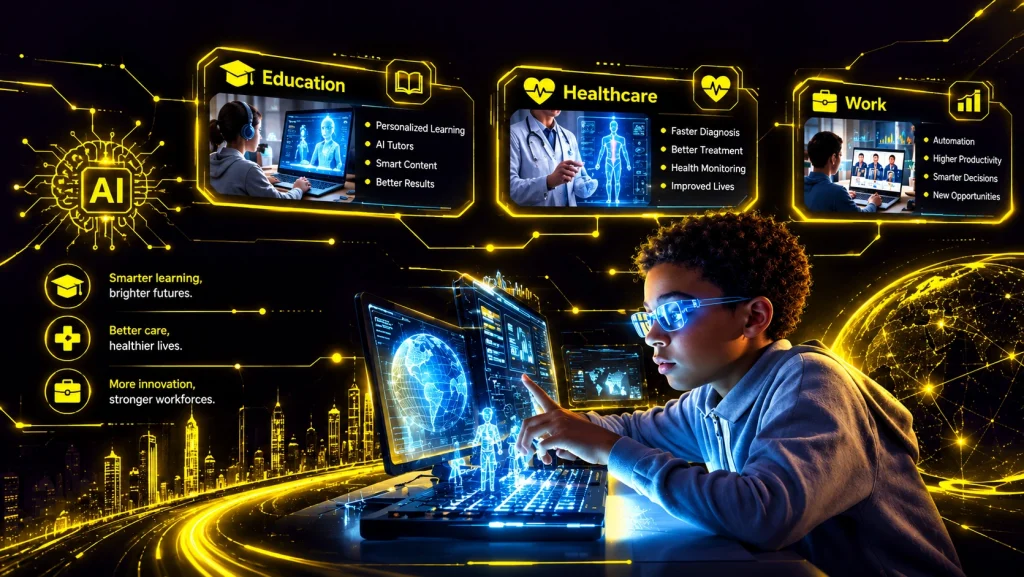
Education: AI learning tools can explain ideas. They can make practice questions. They can sum up reading material. They can help students study at their speed. Students should check the facts. Students should obey rules. Students should keep building thinking.
Healthcare: AI said research, administrative tasks and some image analysis. I see how AI can help professionals. AI can help professionals deal with information fast. AI does not replace trained judgment or emergency care.
Workplaces:Professionals can use intelligence to summarize documents create reports, arrange research and help with tasks that happen over and over. Workers who take the time to check what AI produces and use the tools in the way might be more ready, for new ways of working.
Communication: I find translation, transcription and writing assistance can make communication easier, across languages and situations. However important messages still benefit from review and context.
Small Businesses: AI can help entrepreneurs research audiences prepare content drafts, answer questions and review business data
How AI Is Changing Shopping, Entertainment, and Daily Tasks
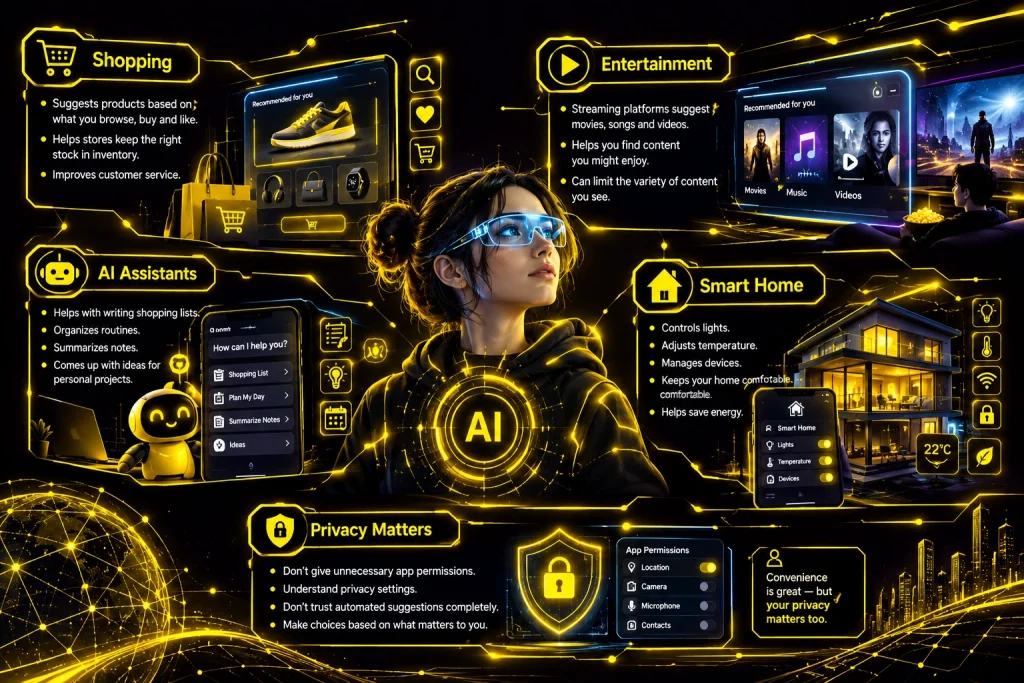
In shopping recommendation systems can suggest products by looking at what people browse what they have bought before and what they say they like. Stores might also use intelligence to help with keeping the right stock in inventory and to improve customer service.
Entertainment streaming platforms use recommendation systems to suggest movies, songs and videos. Recommendation systems give suggestions that help people find things they might enjoy. They can also limit the variety of content people see. For tasks AI helpers can assist with writing shopping lists organizing routines summarizing notes and coming up with ideas, for personal projects.Smart‑home systems can control lights adjust temperature and manage devices. Smart‑home systems keep your home comfortable. Help save energy.
Convenience should not mean giving up privacy or careful decision making. People should look at what app permissions they’re giving understand privacy settings and do not trust automated suggestions completely. I believe privacy is important to think about needs and make choices based on what matters.
Strategies for Using AI Wisely in Everyday Life
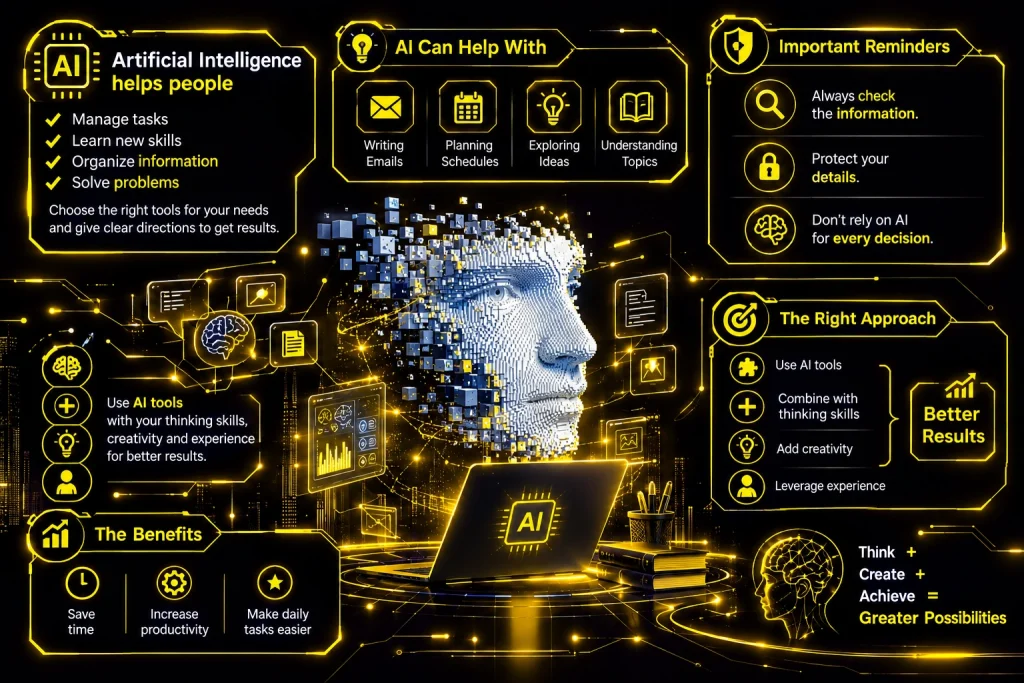
Artificial Intelligence helps people manage tasks learn new skills organize information and solve problems. It is important to pick the tools that match your needs and give directions to get results. I have seen that Artificial Intelligence can help with things, such, as writing emails, planning schedules exploring ideas and understanding topics.Users should always check the information. Users should protect their details. Users should not rely on AI for every decision.Using tools along with thinking skills and creativity and experience can lead to better results. When people use AI with a goal, in mind they can save time and increase productivity and make daily tasks more efficient.
Frequantly Asked Question
1. How is AI changing our daily lives?
AI supports everyday activities through recommendations, digital assistants, translation, navigation, content creation, and automation.
2. What are common examples of AI in daily life?
Examples include spam filters, navigation apps, video recommendations, voice assistants, shopping recommendations, and AI writing tools.
3. How does AI help students?
AI can explain concepts, generate practice questions, summarize materials, and support personalized learning when used responsibly.
4. Is AI safe to use in everyday life?
AI can be useful, but users should protect their data, verify important information, review permissions, and avoid relying blindly on automated outputs.
5. Will AI replace humans in daily activities?
AI may automate certain tasks and change how others are completed. Human judgment, creativity, empathy, and responsibility remain important.
Conclusion
AI is changing the way we live by making many digital activities quicker more tailored to needs and simpler to handle. From education and healthcare, to entertainment, shopping and work the uses of AI are growing all the time. The main thing is to use AI. Keeping information safe examining results building skills and staying independent in thinking let people take advantage of AI while keeping control over their own decisions. By staying in control people can use AI without losing their decision power.