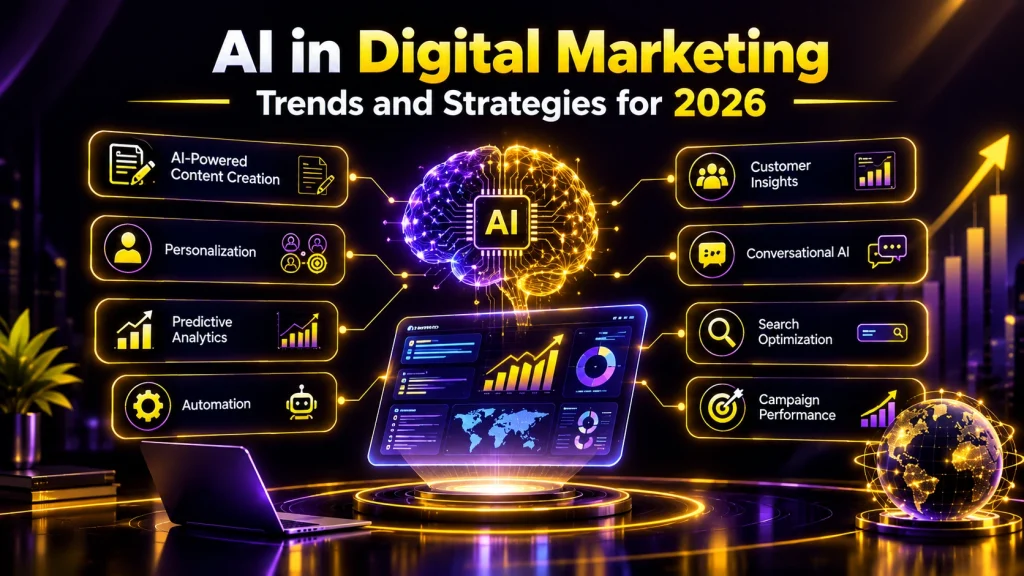
AI in Digital Marketing: Trends and Strategies for 2026
Introduction I see that artificial intelligence is changing the way businesses attract customers understand customers and connect with customers. In marketing ai is included. It helps with making content studying customer behavior doing tasks automatically and tailoring campaigns. In the past marketers spent a lot of time collecting data analyzing campaigns writing content and managing customer interactions by hand. Now tools that are powered by Artificial intelligence let businesses handle many of these tasks quickly and efficiently. Successful artificial intelligence marketing does not rely on the tools. Companies must have a plan. That plan must blend intelligence technology with human creativity insights about customers and well defined marketing goals. By 2026 businesses that use intelligence well will focus on more, than automation. They will emphasize personalization. They will make decisions that deliver customer experiences and will measure the results. AI-Powered Personalization Is Becoming Essential AI makes this possible by analyzing how customers act what they enjoy how they connect with a brand and what they buy. Of sending the same message to all customers companies can use AI to create more personalized content and special offers. For example an online store can recommend products based on visits or previous purchases. An email campaign can send messages to different groups of customers depending on what each group is interested, in.AI can support personalization across: Email marketingWebsite experiencesProduct recommendationsSocial media advertisingCustomer communicationsSearch experiencesPromotional campaigns Before using AI I feel that AI companies must first figure out who their customers are and what they need. Using customer information AI companies can make groups that make sense and give experiences that truly matter to customers. AI Marketing Automation Saves Time and Improves Efficiency Marketing involves activities. Marketing includes scheduling campaigns organizing leads sending emails, analyzing performance and answering customer questions. AI automation can help with: Lead qualificationEmail workflowsCustomer supportSocial media schedulingCampaign analysisData organizationAudience segmentationFollow-up communication For example when someone who might buy a product fills out a form an automatic system can send them a message that makes sense away and also tell the sales people. Strategy: Begin With Easy Jobs Companies don’t have to make all their work automatic at once. Begin with tasks that happen often and don’t have risk. These tasks take up time. When the process is working well slowly add AI to complicated marketing work. Begin with steps check how it goes and grow what is successful. AI Is Changing Content Marketing and SEO Content marketing is another field where artificial intelligence is making a difference. I think AI tools can help marketers generate ideas, research topics build outlines refine drafts check keywords and adjust content for audiences. I believe creating a lot of AI-made content by itself is not a marketing strategy. Search engines and customers both prefer content that truly gives value. Businesses should treat AI as a tool to support their work not replace it. Human marketers still need to ensure the content is accurate original and matches the brand’s voice. AI can help with SEO in ways: – Finding new content opportunities – Understanding what users really want when they search – Suggesting topic ideas – Organizing content into clear structures – Spotting related questions people ask – Reviewing current content, for gaps The best strategy is to blend AI and creativity. Then I add experience, personal examples, strong opinions, fresh insights and the unique personality of the brand.This blend creates content that works better for both search engines and real people. The Future of AI in Digital Marketing: Trends and Best Practices AI in marketing will keep changing. It gives chances for businesses to learn about customers make workflows better and create campaigns that fit customers more. Using every new tool is not needed. The best way is to pick tools that fix problems. Here are several developments to watch in 2026: I agents and connected workflows: AI systems are being created to help with step by step tasks such, as making reports managing campaign tasks and helping customer service. These AI systems work together to handle processes efficiently. I notice how well these AI systems coordinate. This coordination makes everything run smoothly. Conversational marketing helps customers find information compare choices and browse websites easily. This approach feels natural and helpful. First-party data strategies mean that businesses are putting weight on data that comes from customers. This focus, on customer data can lead to better decisions. They are making sure they get consent and follow privacy safeguards. This builds trust and keeps data reliable. Human-led creativity: As AI made content grows original ideas and real communication become more important. Human touch makes content feel authentic and meaningful. Ai: Companies need rules, for handling data checking facts being transparent and having human review. To use these developments well businesses should follow a plan: Define your goal: Decide if you want leads more engagement, less repetitive work or higher campaign profit. Choose tools: Pick AI tools that match your team’s skills fit your budget. Protect customer information: carefull by digital privecy & Use customer data carefully and responsibly. Keep humans involved: Review content, campaign choices and messages, to customers. Measure performance: Track results with the metrics and compare them to past results. Improve continuously: Try ways to learn from the outcomes and update your strategy. You Can Find All Answers Here What are the top AI marketing trends in 2026? Key trends include AI-powered personalization, generative content, AI-assisted SEO, intelligent automation, predictive analytics, conversational marketing, and AI agents. How does AI help small businesses with marketing? AI can help small businesses brainstorm content, organize customer inquiries, analyze campaign performance, automate follow-ups, and create more relevant marketing messages with limited resources. Which AI tools are useful for digital marketing? Tools such as ChatGPT can assist with writing and research, Canva can support creative production, Google Analytics can help analyze website performance, and advertising platforms offer AI-assisted campaign features. The right choice depends on your goals and workflow. How can businesses measure the success of AI marketing?