Introductionn
Not every person who comes to your website is prepared to buy your product or service away. Some people might be learning about your company for the time and others could be looking at different choices. A marketing funnel helps companies lead people along this path. It gives the information at different points from the very first time someone sees your brand to when they become a customer. A carefully thought out marketing funnel can help companies bring in the people create trust get leads and push for sales. Whether you have a business a startup or a digital marketing agency knowing how a marketing funnel works can help you develop a better marketing plan.
What is marketing Funnel ?
I see a marketing funnel, as a step‑by‑step path that shows how a marketing funnel can guide a person from just learning about a business to finally becoming a customer. The marketing funnel is often split into stages: Awareness Interest Consideration Conversion Retention Each stage has a role. The aim is to offer information and experiences that guide people smoothly toward taking a next step
Why Marketing funnel is important ?
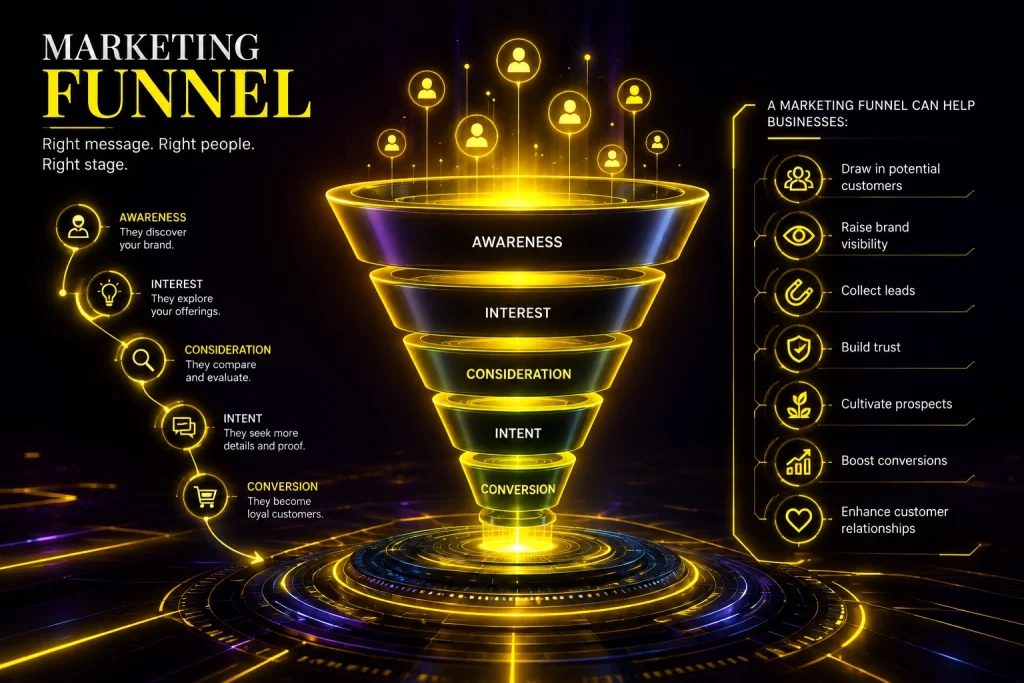
A marketing funnel helps businesses understand the customer journey. Of sending the same message to everyone businesses can develop varied content and plans for people at different stages.
For instance a person who has never heard of your brand may need learning material while a person who is already interested in your service may need price details, reviews or a chat, with a consultant.
A marketing funnel can help businesses:
– Draw in potential customers
– Raise brand visibility
– Collect leads
– Build trust
– Cultivate prospects
– Boost conversions
– Enhance customer relationships
Understanding the Marketing Funnel Stages
Awareness: Attract the Right Audience
The first step is when people learn about your company for the time. They could discover you by searching on Google seeing you on media watching ads reading blogs watching videos or hearing about you from someone else.
At this point the main goal is to get attention and make people notice your brand.
Some good ways to do this include:
SEO
Blog content
Video marketing
Google Ads
Social media advertising content
For example : a digital marketing agency can write a blog post titled “What do you understand by SEO? Why Does Your Business Need SEO?” This method helps the digital marketing agency get noticed by customers. At the time it gives people useful information that they can actually use. It’s a way to build trust and show expertise.
Marketing Funnel: From Awareness to Conversion
Once people know about your business the next step is to keep people interested. At this stage people may want to learn more, about your services, your products or your expertise. You can provide: Educational blog posts Guides Videos Social media content Newsletters Webinars Helpful resources The main goal is to give value and to give value to visitors encouraging visitors to explore your business.
Consideration: Build Trust
At the consideration stage potential customers are actively thinking about whether your product or service fits them. Potential customers may compare businesses read reviews look at services or search for proof that you can solve their problem. – Customer testimonials – Case studies – Reviews – Service pages – FAQs – Demonstrations – Portfolio examples – Clear pricing information. Your website should also show why your offer matters to customers.
Conversion Encourage action
The conversion stage is where a potential customer takes an important action. This could be buying something setting up a meeting completing a form asking for a price or getting in touch with your company. To help with this step use calls, to action (CTAs). Examples include: Get a Free Consultation Request a Quote Contact Us Book a Call Get Started Learn More. When people can act quickly and easily the conversion process becomes smooth.
Retention: Keep Customers Connected
The sales process does not have to stop once someone buys something. The sales process can continue even after someone buys something. Creating a lasting connection can be a part of a sales plan. Businesses can stay connected through: Email newsletters Helpful updates Customer support Loyalty programs Personalized offers New product information Educational content Good communication can help businesses maintain relationships with existing customers.
Step to build an effective marketing funnel
Understand Your Target Audience
Understand Your Target Audience I think before you begin creating your sales funnel you should first decide who you want to focus on. Find out what they need what problems they have, what they are interested, in and what questions they ask. How they buy things. The more you know, about your audience the easier it is to create content that truly matters to your audience.
Define Your Marketing Goals
Decide what you want your funnel to do.
Your objectives might be:
Getting people to visit your website
Creating new leads
Receiving more questions or interest
Selling more products
Building your email list
Making customers interact more with your brand starts with having objectives. When you know what you want to reach it becomes much easier to pick the ways. It also helps you follow your steps and watch how you are doing.
Create Content for Every Funnel Stage
Different customers need kinds of information.
For instance:
- Awareness: Blog posts, social media posts, videos
- Interest: Guides, newsletters, educational content
- Consideration: Case studies, testimonials, service pages
- Conversion: Contact forms, consultations, offers, clear CTAs
- Retention: Email updates, resources, customer support.
Making content for every stage helps lead people along their customer journey.
Choose the Right Marketing Channels
I think you do not need to use every marketing channel. Instead pick the places where the people you want to reach spend their time. Depending on your business these could be:
- Search engines
- Social media
- Email Google Ads
- Websites
- Video platforms
- Content marketing
A focused strategy can be easier to manage and measure.
Create Calls to Action
I think every important page should give visitors a next step.
Of vague buttons you might find action-focused CTAs, like “Book a Consultation ” “Request a Quote ” or “Get Started.” A clear CTA tells visitors what a CTA can do next.
Track Your Results
Tracking performance is, like a compass that shows you where people start and where they drop out of your funnel.
Important metrics can include: Website traffic , Click-through rate , Engagement rate Leads , Conversion rate , Cost per lead , Customer acquisition cost , Return on advertising spend.
Use these insights to identify areas that need improvement.
Common Mistakes to Avoid in a Marketing Funnel
I see that businesses often make mistakes when building a Marketing Funnel.
Using the Same Content for Everyone A visitor and a ready‑to‑buy customer may need information. Make content that fits each stage of the Marketing Funnel journey.
Having CTAs If visitors do not know what to do next they may leave your website. Use relevant calls, to action.
Making the Process Too Complicated Long forms, confusing navigation or many steps can make it difficult for customers to complete an action.
Ignoring Existing Customers Marketing should not stop after a sale. Continue providing information and support to maintain customer relationships.
The Role of SEO and Content Marketing in a Funnel
Search engine optimization helps your business connect with people who are already looking for information products or services that match what you provide.
By making your website and content better for the searches people are doing SEO can help get the right people to visit your website Content marketing then gives information that helps visitors see their problem and look for solutions.
For example: Search → Blog → Service Page → Case Study → Contact Form This makes a path, from discovery to a potential conversion.
Conclusion
An effective marketing funnel helps businesses organize their marketing activities, around the customer journey. Marketing funnel starts with creating awareness. Marketing funnel then builds trust. Marketing funnel also generates leads. Marketing funnel finally encourages conversions. Maintains customer relationships. Each of these stages plays a role. The key is not to attract more visitors but to provide the right information at the right stage. Understanding your audience is the step. Creating content is the second step. Choosing marketing channels is the third step.
Got Questions
You Can Find All Answers Here
A marketing funnel is a way to help people who don't know your business yet become customers. It starts with them learning about your brand getting thinking about your products or services taking action like making a purchase and finally staying with your business for a long time.
The common stages are awareness, interest, consideration, conversion, and retention.
It helps businesses understand the customer journey and provide relevant information at different stages.
A marketing funnel usually works to attract and nurture customers. A sales funnel often works to move prospects, toward a sales decision. People sometimes use marketing funnel and sales funnel the same way. A distinctive brand position and better customer experience can create a meaningful competitive advantage.
Start by understanding your audience. Create content that fits each stage of their journey. Improve how people experience your website. Use calls, to action so visitors know what to do next. Track the performance metrics that matter most.